Watching how the press handled this release is a short course in how difficult material gets absorbed. The first few days were about a street in Baghdad. After that they mostly were not.
The first days
The story travelled immediately. Wire services picked it up from the press conference, major broadcasters ran segments, and the recording was online in full for anyone who wanted it.
Early coverage did the obvious things: described the three engagements, named the two Reuters staff, reported the US position that an investigation had cleared the crews in 2007, and noted that Reuters had been asking for the footage for years.
What broadcasters had to decide
Every television editor faced the same question that week: how much of a person dying do you put on screen at six o'clock?
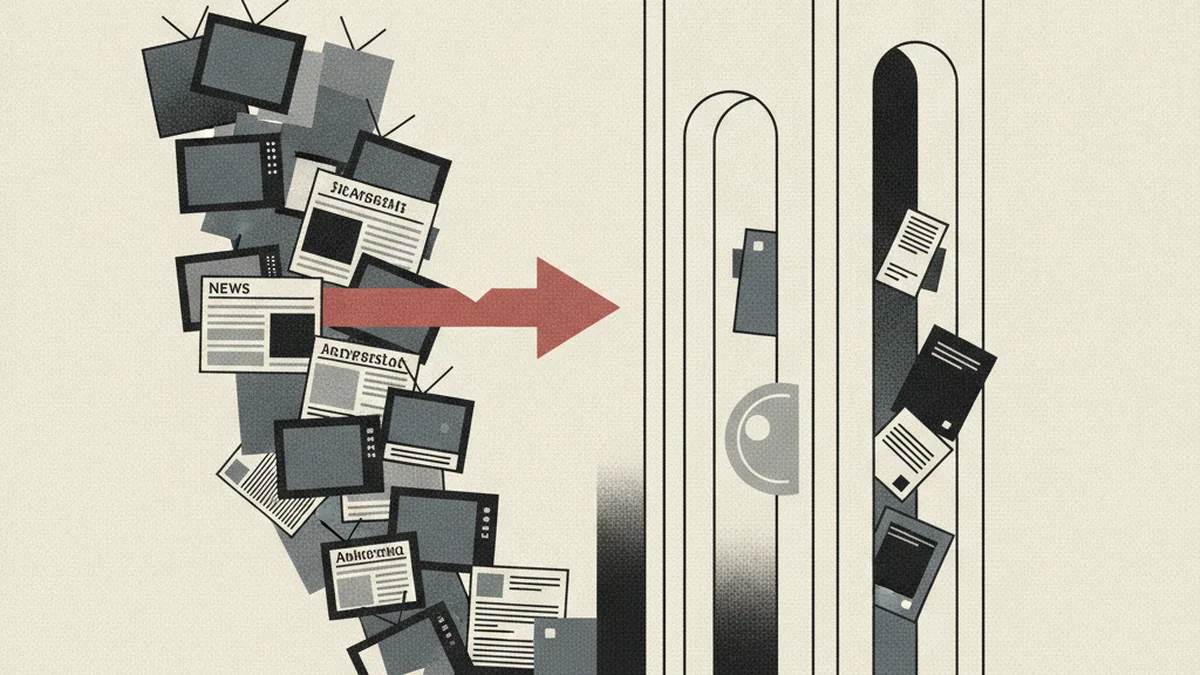
Most showed very little. Wide shots, cutaways before the impacts, and a presenter describing what followed. That was defensible and it had a consequence: the audience that got its news from television got a version in which the central events were described rather than shown, while the audience online watched the whole thing.
Two different publics
For several weeks, people arguing about this were often arguing from genuinely different material: a two-minute broadcast summary against seventeen minutes of captioned footage against the full recording. Almost nobody said which they had seen. They still mostly do not.
The shift
Within roughly a week the dominant frame changed. The lead question stopped being what happened in Al-Amin al-Thaniyah and became whether WikiLeaks had behaved responsibly.
| Week | Dominant question |
|---|---|
| Week 1 | What does the footage show? |
| Week 2 | Is the edit fair? Is the title propaganda? |
| Weeks 3 and after | What is WikiLeaks, and who is Julian Assange? |
| From May 2010 | Who leaked it, and what will happen to them? |
By the end of May the arrest of the analyst who leaked it had given the story a new protagonist, and the airstrike became background.
The pattern, stated once
The fastest way to blunt a piece of evidence is not to deny it, but to make the conversation about the person who produced it. That is what happened within a week in April 2010, and it has repeated with almost every leaked recording since.
The title did a lot of this
Calling the file Collateral Murder guaranteed attention and handed every critic a legitimate objection in two words. A publisher that has announced its verdict invites an argument about the publisher.
It is worth being fair in both directions. The name is why tens of millions of people watched. It is also why a substantial part of the coverage became a debate about framing rather than about a street where twelve or more people died. Both effects were entirely predictable and the organisation chose the trade.
What the coverage got right
More than it is usually given credit for. Serious outlets verified independently rather than taking the release on trust. Several reconstructed the sequence carefully and separated the three engagements, which a surprising amount of later commentary fails to do. Reuters' three-year attempt to obtain the recording was reported, which put the leak in its proper context.
What it missed
Three things, consistently. The missile strike on the building was barely covered anywhere, and still is not. The identities of the men killed in the street were mostly not pursued, so they remain unnamed. And the question of whether this engagement was typical or exceptional, raised by two soldiers from the unit, was never seriously examined by anyone.
- The missile strike on the building was barely covered anywhere, and still is not.
- The men killed in the street were mostly never named, so they stayed unnamed.
- Whether the engagement was typical — raised by two soldiers — was never examined by anyone.
What readers did with it
Coverage is only half of this. The other half is what people did once the material was in front of them, and the release happened at an unusual moment: early enough that video sharing was normal, late enough that almost everyone had the bandwidth to watch.
The result was that a great deal of the argument took place outside news organisations entirely. People watched the clip, formed a view, and argued about it with each other, mostly without reading any of the surrounding record. Many of the claims that still circulate about the footage were established in those first weeks and have been repeated ever since without anyone going back to check them.
That is not a complaint about audiences. It is an observation about sequence: opinions were formed at the speed of the video and the careful analysis arrived afterwards, to a much smaller readership. Every subsequent piece of leaked conflict footage has followed the same order.
The coverage pattern that has repeated ever since
Leaked conflict footage appears. There is a day or two of shock. Then the argument moves to the edit, the source, the motive of the publisher, and the politics of whoever is sharing it. The event itself becomes the thing everyone has already moved past.
This is not always cynical. Questions about editing and sourcing are real and need asking, as the verification page argues at length. But the effect is consistent and worth naming: the fastest way to blunt a piece of evidence is not to deny it but to make the conversation about the person who produced it. Anyone reading coverage of the next leaked recording will see the same sequence, usually within a week. Why footage moves people at all explains why the first week is the only one that counts.
Questions people ask about this
How quickly did the story spread?
Did news organisations verify it independently?
Why did coverage move on to WikiLeaks?
Where this comes from
- The Guardian's Iraq coverage — Guardian News and Media
- Reuters news archive — Thomson Reuters
- July 12, 2007, Baghdad airstrike — Wikipedia
Spotted something wrong? Tell us and we will fix it.