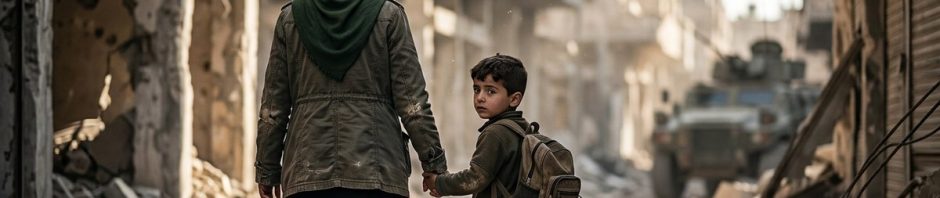
The following article is a thorough, reader friendly exploration of how modern warfare affects civilians, why civilian harm persists despite international norms, and how observers document and interpret these realities. Built for readers of CollateralMurder.com, it combines history, law, data driven analysis, and practical guidance to foster informed understanding without sensationalism.
Understanding Civilian Harm in Modern Warfare
Civilian harm is not a single event but a continuum that spans immediate injuries during an attack and long term suffering that follows from disrupted livelihoods, healthcare, and infrastructure. Modern warfare often unfolds in complex environments where combatants and non combatants mix in crowded spaces, and where the full consequences of a strike unfold over hours, days, and years.
- Direct harm: injuries and deaths caused by a specific bombing, shelling, or engagement.
- Indirect harm: conditions that arise after conflict such as disease, food insecurity, and lack of medical care.
- Structural harm: damage to homes, schools, water systems, and electricity that undermines safety and dignity.
Why this matters for readers of CollateralMurder.com is that the site documents a controversial war video and related civilian casualty statistics. The goal is not sensationalism but a careful, factual understanding of civilian impact across conflicts and time.
What does civilian harm look like today
Civilian harm in contemporary conflicts can manifest in several recognizable patterns:
1. Attacks on densely populated neighborhoods or civilian infrastructure such as hospitals and markets.
2. Strikes on dual use sites that blur the line between civilian and military targets.
3. Long running blockades or siege conditions that starve civilians of essential services.
4. Indirect effects from displacement, unemployment, and erosion of civic life.
5. Information and media effects that shape public perception and policy responses.
The Role of Media and Narrative
Media coverage drives how audiences understand civilian harm. Balanced reporting connects on the ground realities with legal and ethical frameworks. Yet narratives can skew with selective imagery, timing, or framing. A responsible analysis pairs eyewitness accounts with independent verification, cross checks casualty figures, and situates events within the broader legal and strategic context.
The Legal Frame: International Humanitarian Law and Civilian Protection
International humanitarian law IHL provides a framework intended to protect civilians during armed conflict. It does not eliminate all harm, but it sets clear expectations about minimization and accountability.
Core Principles
- Distinction: Parties must distinguish between military objectives and civilians. Attacks should target only military objectives.
- Proportionality: Force used must be proportional to the concrete military objective, and not result in excessive civilian damage in relation to the anticipated military gain.
- Military necessity: Actions must be necessary to achieve a legitimate military objective.
- Precautions in attack: Parties must take feasible precautions to avoid or minimize civilian harm.
Dual-Use and Targeting Dictions
A persistent challenge is the growing role of dual use ideas, where objects or sites serve both civilian and military purposes. Examples include power plants, bridges, internet infrastructure, or a hospital adjacent to military activity. The law requires clear justification that any harm to civilians will be limited and proportionate, but in practice dual-use environments create ambiguity that defenders and critics alike scrutinize.
Enforcement and Accountability
- Enforcement gaps: Violations of IHL often go unpunished or unverified, due to political complexities, governance gaps, and the fog of war.
- Accountability pathways: Domestic courts, international tribunals, and universal jurisdiction are tools to hold individuals and states liable.
- Documentation and proof: Establishing credible evidence is critical for accountability, including timelines, geospatial data, medical reports, and independent investigations.
The Mechanisms Behind Civilian Suffering
Understanding why civilian harm persists requires looking at the interplay between military planning, technology, and political incentives.
Proportionality Challenges
- Military advantage vs civilian risk: Strikes may claim a legitimate military objective, but civilian harm must be weighed carefully against the expected gain.
- Uncertainties on the ground: In fast moving operations or complex urban environments, assessing the exact impact of a strike becomes difficult.
Distinction and Military Necessity Tensions
- Dual use complicates decisions: When civilian infrastructure supports war making in some contexts, courts and armies must demonstrate that civilian harm is strictly necessary.
- Military necessity sometimes conflicts with civilian protection: In practice, decision makers may prioritize immediate tactical gains, raising debates about ethical restraint.
Indirect and Long-term Harm
- Healthcare disruption: Attacks on clinics or supply lines can cripple medical response.
- Economic shocks: Destruction of markets, roads, and utilities erodes livelihoods and fuels cycles of vulnerability.
- Education and social effects: Attacks on schools or the displacement of families disrupt learning and community cohesion.
The Impact of Infrastructure Attacks
- Power and water systems: Disruption to essential services increases mortality from non combat causes.
- Communications networks: Loss of information channels hinders emergency responses and civic life.
- Transportation corridors: Damage to roads and railways complicates aid delivery and civilian movement.
The Collateral Murder Incident as a Case Study
CollateralMurder.com is anchored by a controversial 2007 video and the ongoing discussion around civilian harm in war. Examining this case helps illustrate how a single incident can illuminate broader themes.
What happened in the 2007 video
The video documents a sequence in an active conflict zone where a combination of armed engagement and civilian presence created a contested scene. The footage has been used to argue about rules of engagement, civilian protection, and the reliability of on the ground narrations.
Civilian casualties documented
- Civilians in the vicinity were reported to be affected in various ways, including injuries and casualties.
- The documentation sought to capture not just the immediate event but the surrounding context: who was nearby, what actions occurred, and how military operators evaluated risk.
Lessons learned and contested interpretations
- The importance of independent verification: Annexes, timelines, and third party records help verify what can be proven.
- The complexity of distinguishing military objectives: When combatants and civilians mingle, the line between legitimate target and protected person becomes blurred.
- The necessity of accountability: The case underscores why transparent investigation and clear lines of responsibility matter for civilian protection.
Data, Statistics, and Civilian Casualties
Numbers alone do not tell the whole story, but they help build a picture of civilian impact and the range of experiences across conflicts.
Broad patterns by conflict era
- Post 9 11 era: Modern warfare has seen increased urban fighting, with higher risks to civilians in some theaters.
- Prolonged conflicts: Sustained campaigns often lead to cumulative harm rather than one off incidents.
- Technology driven changes: Precision weapons can reduce some casualties but add new kinds of risk in dense urban settings.
Iraq War civilian casualty debates
- Estimates vary based on methodology, including source reliability, casualty verification, and scope of data collection.
- The conversation emphasizes that civilian harm is not a marginal issue but a central consequence of many warfare strategies.
- A rigorous approach weighs both direct casualties and indirect effects like displacement and infrastructure loss.
How to read casualty data responsibly
- Check definitions: Is the data counting direct fatalities, indirect deaths, or both?
- Understand the time frame: Are we looking at a single incident, a year, or an entire campaign?
- Look for methodology: What sources are used, and how are disputes resolved?
- Seek triangulation: Cross reference medical records, witness accounts, NGO reports, and official statements.
The Narrative Discourse: How War Stories Spread
The way stories about civilian harm spread matters for public understanding and policy.
The role of videos, blogs, and timelines
- Visual evidence can sharpen attention to civilian harm, but it must be contextualized with analysis.
- Timelines help readers trace events, responses, and outcomes, connecting incidents to legal and ethical questions.
Misinformation risks and verification
- Unverified claims can mislead readers about the scale and causes of harm.
- Verification requires corroboration from multiple independent sources and, where possible, verifiable data such as hospital records and official investigations.
Civilian Resilience and Humanitarian Responses
In every conflict, civilians and humanitarian actors adapt to preserve life and dignity.
- Humanitarian aid and local networks: NGOs, community organizations, and faith groups often coordinate relief despite barriers.
- Health and psychosocial support: Clinics, mental health services, and protective spaces help communities cope with trauma.
- Reconstruction and protection: Rebuilding infrastructure and strengthening civilian protection measures are long term processes.
The importance of civilian voices
Incorporating civil society perspectives ensures that policy decisions reflect real world needs rather than abstract calculations of advantage.
What Readers Can Do: From Awareness to Advocacy
If you care about civilian harm and the responsible documentation of conflicts, here are practical steps you can take.
1. Education and critical consumption
- Read multiple sources with different viewpoints.
- Learn the basics of international humanitarian law and how it applies to real world events.
- Practice fact checking before sharing sensational claims.
2. Supporting reputable documentation projects
- Support organizations that verify casualty data with transparent methodologies.
- Promote timelines and primary source repositories that connect events to credible evidence.
- Encourage open discussions about dual-use challenges and civilian protection.
3. Engaging with policy through informed dialogue
- Contact representatives with reasoned arguments about civilian protection and accountability.
- Participate in public forums that emphasize evidence based analysis.
- Share resources that explain how international law seeks to protect civilians, and where it falls short.
Resources and Further Reading
- International humanitarian law texts and commentaries on civilian protection.
- Reputable databases on civilian casualties and conflict impact.
- Independent investigations and NGO reports that document events with transparency.
- Commentaries on dual-use targets, proportionality, and military necessity.
- Case studies from conflicts with robust, well documented civilian casualty data.
Conclusion
Civilian impact is a defining measure of modern warfare. By examining the legal frameworks, the realities on the ground, the ways data is gathered and interpreted, and the voices of affected communities, readers can gain a nuanced understanding of what drives civilian harm and what steps are possible to reduce it. The Collateral Murder context reminds us that even in highly charged conflicts, civilian protection remains a crucial, ongoing concern. Responsible coverage, rigorous verification, and persistent advocacy for accountability are essential pieces of moving toward a future where civilian harm is less likely and less accepted as the price of conflict.