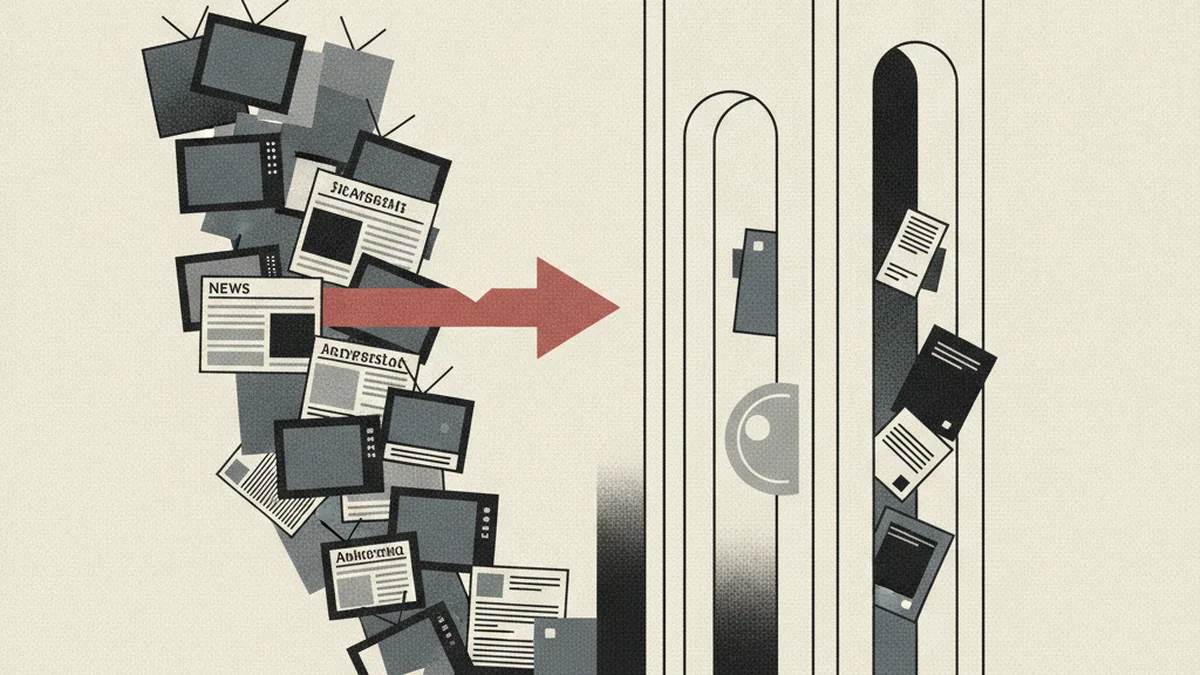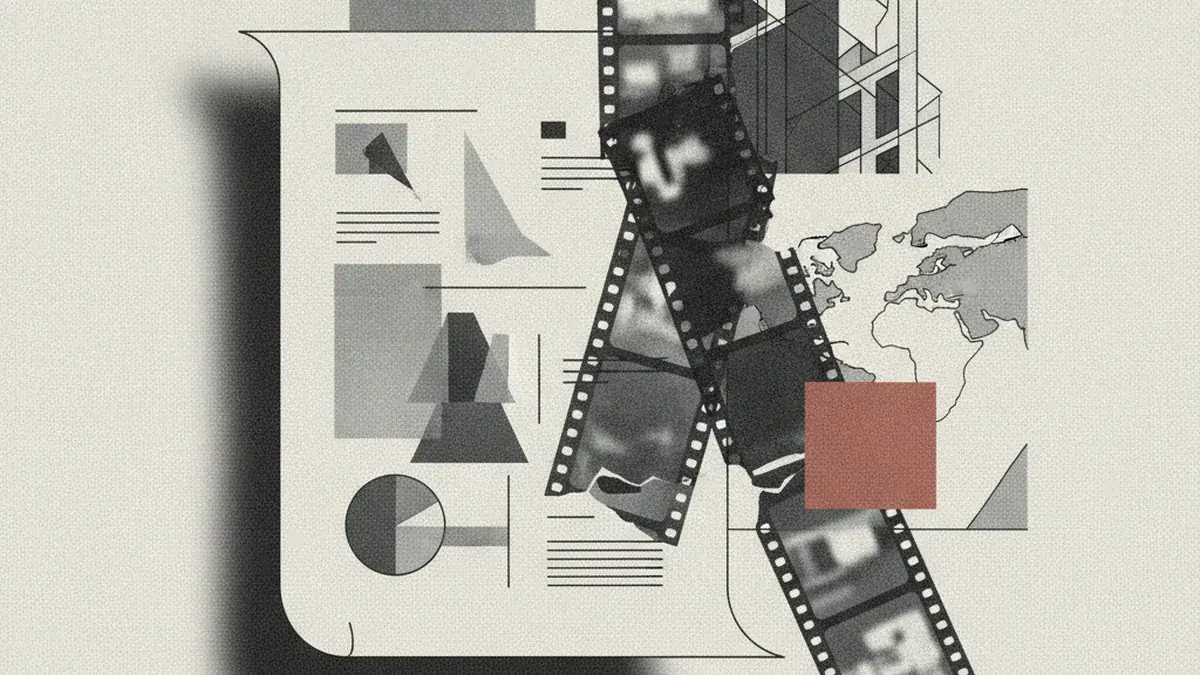
For years before April 2010, anyone who wanted to know that civilians were dying in Iraq could find that out. The numbers were published. Reports existed. Almost nothing changed. Then a grainy clip appeared and millions of people reacted as though they had learned something new, which in a real sense they had.
Why numbers do not work
A casualty figure asks you to imagine something. It gives you a quantity and leaves the picture to you, and most people, sensibly, do not build that picture because it is unbearable and there is nothing to do with it.
Footage removes the choice. You are not asked to imagine a man crawling along a kerb; you watch it happen at the speed it happened. The information content may be lower than a good report. The effect is far larger.
The difference, in one line
A casualty figure asks you to imagine something. Footage removes the choice. The information content may be lower than a good written report; the effect is far larger.
What the release demonstrated
The facts of that morning had been publicly available in outline since 2007. Reuters had reported the deaths of its staff. A book in 2009 had described the engagement and quoted the radio. Almost nobody reacted.
Within days of the video appearing, it was a global story. The difference was not new information. It was that the same information arrived in a form nobody could hold at arm's length.
The part people underestimate
It was the sound
Ask anyone what they remember about this footage and they will usually quote the radio, not describe the picture. The visual is a grey smear. The audio is two people talking, and it is the audio that produced the reaction.
This holds for conflict footage generally. Voices carry intent, or appear to, and an audience reads tone with far more confidence than it reads a shape on a screen. It is also where misjudgement is easiest: tone is evidence of state of mind, not of legality, and people routinely treat the two as the same.
What is actually happening to the viewer
- You become a witness. Not someone reading about an event but someone who saw it, which feels like knowledge and is stored like memory.
- You acquire specific people. Not twelve dead but a man crawling and a van stopping.
- You experience duration. Several minutes of watching a wounded man is not summarisable, and that is the point.
- You form a judgement fast and hold it. Which is where the trouble starts.
What watching actually does
You stop being a reader and become a witness. You acquire specific people rather than a total. And you form a judgement fast, then hold it — which is where the trouble starts.
Why this power is dangerous
Everything that makes footage persuasive also makes it easy to misuse, and the danger is not usually fabrication.
| Technique | Effect | Detectable? |
|---|---|---|
| Selective cutting | Removes what happened before or after | Only with the full source |
| Captions and labels | Tells you what you are seeing | Visible, but works anyway |
| Recontextualising real footage | Real clip, wrong war, wrong year | With verification work |
| Framing quotation or title | Sets a conclusion before the first frame | Obvious and highly effective |
The 2010 release used the last two openly. The short version is an argument as well as a record, and it was published alongside the full file, which is more than most broadcasters manage.
What a careful viewer can actually do
Not much about the emotional effect, and that is fine. Being moved by watching people die is not a flaw. The useful discipline is narrower.
Find out which version you are watching. Look for the unedited source. Separate what the camera recorded from what the caption tells you. Ask what is outside the frame, and ask what happened in the minutes before the clip begins. The verification page sets out the method.
What war footage still cannot tell you
It cannot tell you what anyone believed. It cannot tell you what a crew had been told two minutes earlier, what the rules required, or what was behind a wall. A careful reading of this recording ends in uncertainty on several points, which is unsatisfying and correct.
So the honest summary of footage as evidence is double-edged. It is the only thing that reliably makes people care, and it is a poor instrument for establishing what actually happened. A public that responds only to video will be moved by the wrong things as often as the right ones, and the remedy is not to distrust footage but to do the work of reading it. The people in this recording deserve at least that much attention, and the full account is here.
Questions people ask about this
Why did the video change opinion when reports had not?
Was the reaction mostly to the pictures?
Does that mean footage is unreliable?
Where this comes from
- July 12, 2007, Baghdad airstrike — Wikipedia
- Committee to Protect Journalists — CPJ
- The Guardian's Iraq coverage — Guardian News and Media
Spotted something wrong? Tell us and we will fix it.