Thursday, 12 July 2007, in Al-Amin al-Thaniyah, a dense residential district in the east of Baghdad. It was hot, it was mid-morning, and there were three groups of people in the same few streets who did not know about each other. That is the shortest honest explanation of what went wrong.
The week before
American infantry from a battalion of the 1st Infantry Division had been working this part of the city since February. The 2007 troop surge had pushed units off the big bases and into small outposts inside neighbourhoods, which meant daily contact with whoever was shooting at them.
In the days before 12 July that contact had been heavy. There was small-arms fire and rocket-propelled grenade fire against American vehicles and patrols in the area, and the company had taken casualties. The unit on the ground was tired, jumpy and losing people. None of that decides anything about the law, and all of it explains the temperature.
Three groups in the same streets
By mid-morning there were three sets of people in the district who each had a different picture of it.
- The ground troops. American soldiers moving on foot and in vehicles, reporting contact, asking for air support.
- The men in the street. A loose group of eight to twelve, at least one of them carrying a rocket-propelled grenade launcher, standing at a corner. Two of them were journalists who had arrived to cover the fighting.
- The helicopters. Two AH-64 Apaches, callsigns Crazyhorse 1-8 and 1-9, working overhead and looking at all of it through a narrow grey sight.
Namir Noor-Eldeen, a 22-year-old Reuters photographer, and Saeed Chmagh, a 40-year-old Reuters driver, had gone in that morning to do their jobs. Neither had press markings visible from a thousand feet up. From the air they were simply two more men in a group.
| Who | Where | What they could see |
|---|---|---|
| Infantry on the ground | In the streets, on foot and in vehicles | Faces, colours, detail — but only the block they were in |
| The men at the corner | Standing in the open | Each other; no idea an aircraft had them in a sight |
| The Apache crews | About a thousand feet up | Grey shapes at high magnification, and the radio |
Three groups, three completely different pictures of the same few hundred metres. That mismatch is the whole morning in one line.
The first engagement
The lead Apache crew reported the group, identified what they took to be weapons, and asked for clearance to engage. They received it, and fired the 30mm cannon in several bursts.
What the burst did
The group had no chance. Cannon rounds designed to stop vehicles hit men standing in the open. Namir Noor-Eldeen was killed. At least seven or eight others died in the same seconds. One man ran and was fired on again. Dust filled the street.
What the crew believed they saw
What the crew saw and how reasonable it was is the subject of the frame-by-frame page. The short version: at least one visible object really did look like a launcher, and a long camera lens at that distance really does look similar.
Several minutes with a wounded man
When the dust cleared, one man was alive. Saeed Chmagh had survived the burst and was dragging himself along the kerb.
The crew watched him for minutes. He was plainly out of the fight. They could not fire again unless he did something that made him a target, and they said so on the radio in a way that is hard to listen to: they wanted him to pick up a weapon. This stretch is the emotional centre of the video for most people who watch it, and it is not itself unlawful. It is a recording of men wanting permission.
The van stops
A plain van came down the street and pulled up beside him. Men got out and began lifting him. There was no weapon visible at any point.
The crew reported that people were picking up bodies and possibly weapons, asked for clearance, and fired into the vehicle. The driver, Saleh Matasher Tomal, was killed. Saeed Chmagh was killed. In the front seat, invisible from the air, were Tomal's two children. Both were badly hurt. Both lived. This phase has its own page, because it is where the legal argument is sharpest.
The soldiers arrive
Ground troops reached the scene within minutes of the van being hit. Specialist Ethan McCord looked into the front of the vehicle and found the two children. He carried the girl out first, then went back for the boy, and got them to an armoured vehicle to be evacuated.
Finding the children
What he described seeing that day, and what it did to him afterwards, is one of the few first-hand accounts from the ground anywhere in this record.
The missiles, about half an hour later
Later the same crew reported armed men entering a partly built residential block nearby and fired three Hellfire missiles into it. A man can be seen walking past on the street moments before the first missile lands. What was inside has never been established publicly, and no full account of who died there has ever been published. That phase is covered here.
By lunchtime on 12 July 2007 it was a report
By the middle of the day the shooting was over and the paperwork had started. The two helicopters went back to base. The ground unit carried on with its patrol. Somewhere in a building, an officer began writing up an engagement in which somewhere between twelve and eighteen people had died, including two employees of an international news agency.
The questions that started the same day
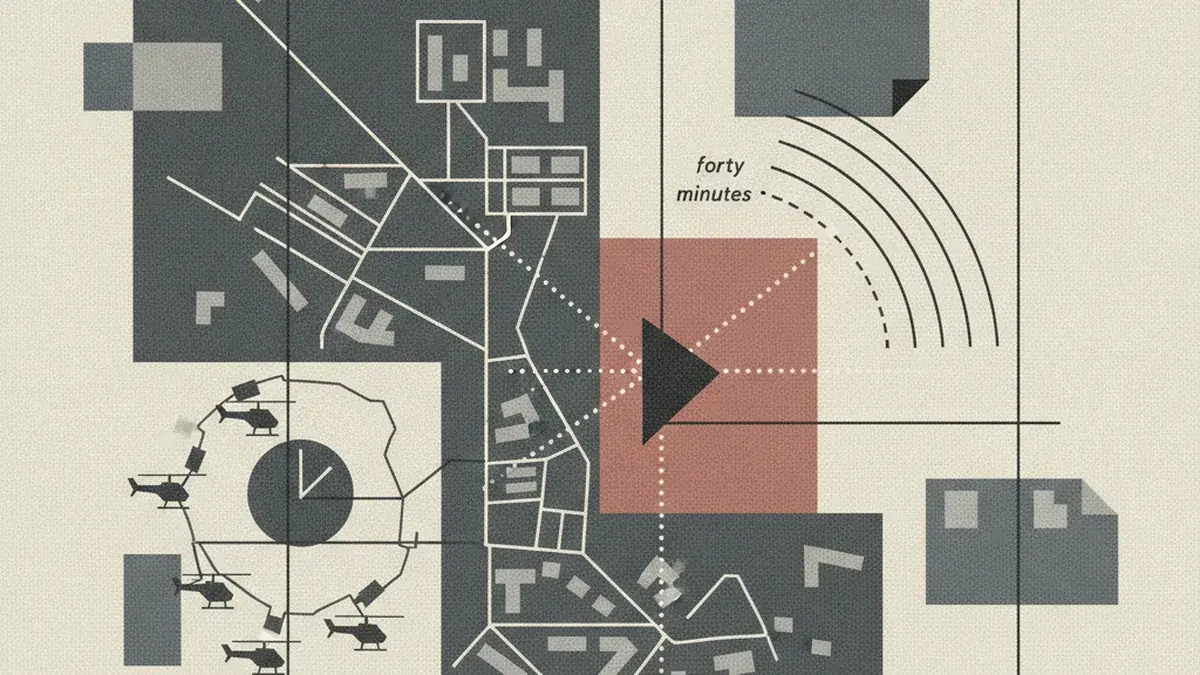
Reuters started asking questions within a day. It would be nearly three years before anyone outside the military saw what the camera had recorded, and by then the forty minutes described on this page had become something else entirely. The timeline picks up from there.
Questions people ask about this
What time of day was the airstrike?
Were the journalists embedded with US forces?
How long did the whole thing last?
Where this comes from
- July 12, 2007, Baghdad airstrike — Wikipedia
- Department of Defense FOIA reading rooms — US Department of Defense
- Reuters news archive — Thomson Reuters
Spotted something wrong? Tell us and we will fix it.