A question people ask reasonably: if modern weapons are so accurate, why do wars still kill so many civilians? The answer is that accuracy was never the limiting factor, and this airstrike shows why with unusual clarity.
What precision actually means
A precision weapon hits the point it was aimed at. That is the whole claim, and it is a genuine advance over an era when hitting the right building required destroying the street.
What precision cannot do is tell you whether the point you aimed at was the right one. It is a property of the delivery, not of the decision, and the decision is where nearly all civilian harm originates.
What precision cannot do
It hits the point it was aimed at. It cannot tell you whether that point was the right one. Precision is a property of the delivery, not of the decision, and nearly all civilian harm originates in the decision.
Where things actually go wrong
- Detection. Something is seen.
- Identification. A judgement is made about what it is. This is where most failures happen.
- Decision. Rules are applied, clearance is sought.
- Delivery. The weapon does what it is designed to do.
- Effect. Whoever is there is hit.
Step four is the part that improved enormously. Step two is the part that has barely improved at all, because it depends on sensors, context and human judgement under pressure.
The example this archive is built on
An accurate weapon and a wrong judgement
On 12 July 2007 the cannon hit exactly what it was aimed at. The problem was that the group included a photographer with a telephoto lens that resembled a launcher through a monochrome sight at a thousand feet. No improvement in accuracy would have changed the outcome by a single death.
Cities remove the margin for error
In open country a wrong identification kills the people identified. In a dense district it kills them plus whoever is walking past, and the same event displaces families, damages the water main and closes the school on the corner.
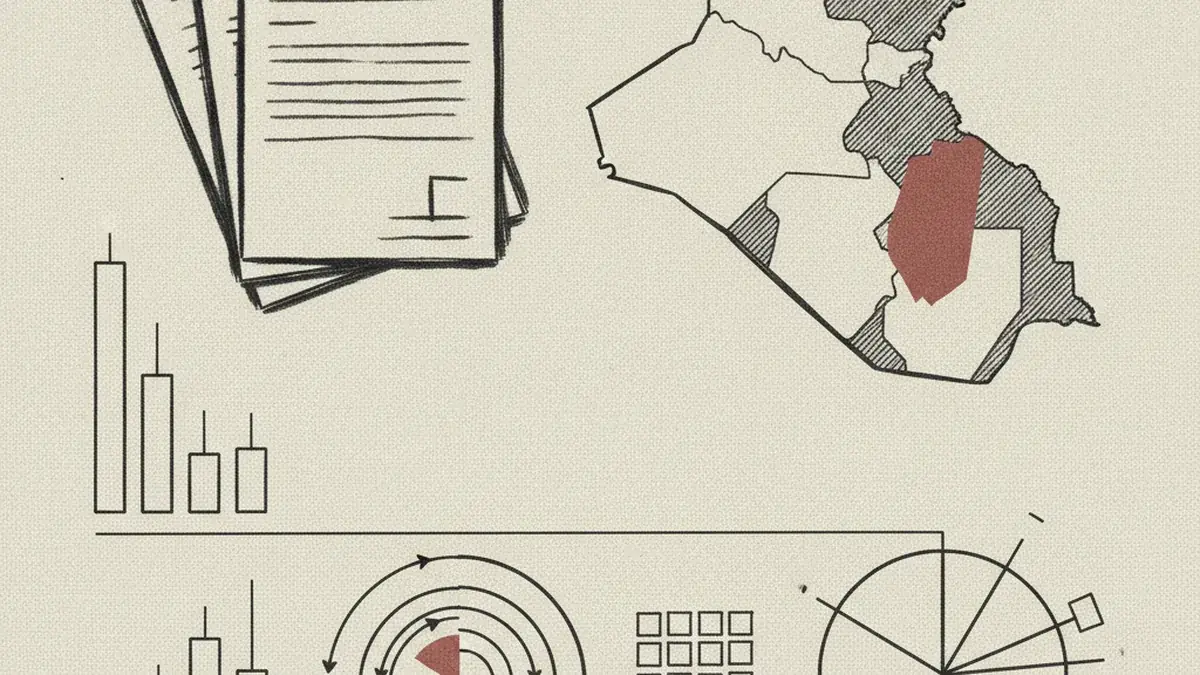
Modern conflict is overwhelmingly urban, which means the tolerance for identification error has shrunk at exactly the point where identification is hardest. The district where this happened shows what that looks like on a map.
The harm that is not counted
| Harm | Counted? |
|---|---|
| Deaths | Partially, and disputed |
| Injuries | Rarely, and always undercounted |
| Displacement | Sometimes, at national level |
| Loss of electricity, water, hospitals | Almost never attributed to specific events |
| Loss of income and education | Not counted at all |
The wider picture is that deaths are the smallest measurable part of what a war does to a population, and the only part that ever appears in a headline.
Who decides what counts as a civilian death
There is a quieter mechanism worth naming, because it shapes every figure you will ever read. The party that carries out an attack is usually the party that classifies the dead.
If a group of men is assessed as fighters at the moment of firing, they generally stay classified that way in the record, even when nothing afterwards confirms it. Correcting the classification requires someone outside to investigate, obtain the evidence and argue the point, which is precisely the chain that almost never completes.
So the published toll of a conflict is not a neutral measurement. It is partly an artefact of who did the assessing and what they assumed. That is not a claim about bad faith; it is what happens when the only people present with a notebook are the people who fired.
What actually reduces civilian harm
Not better weapons. Better information, more time, and a willingness to accept military risk in exchange for civilian safety.
Waiting is the single most effective measure available, and it is the one hardest to take when a unit below you is reporting contact. That tension is not solvable by technology, and it is exactly the tension present in the minutes before the first burst that morning.
Why the technology argument misses the civilian cost
Arguments about civilian harm tend to become arguments about weapons, because weapons are concrete and can be improved by engineers. The evidence points somewhere less convenient.
The decisive factors are what the person deciding could see, how much time they had, what they had been told, and what standard they were held to afterwards. Three of those four are matters of judgement and rules, and the fourth, what happens afterwards, is the one that has changed least since 2007. A perfectly accurate weapon aimed at the wrong group of men kills them just as thoroughly as an inaccurate one, which is the plainest thing this recording has to teach.
Questions people ask about this
If weapons are precise, why do civilians die?
What reduces civilian harm most?
Is the 2007 airstrike typical of this problem?
Where this comes from
- Rules on distinction, proportionality and precautions — International Committee of the Red Cross
- Human Rights Watch reporting on Iraq — Human Rights Watch
- Iraq Body Count — Iraq Body Count project
Spotted something wrong? Tell us and we will fix it.