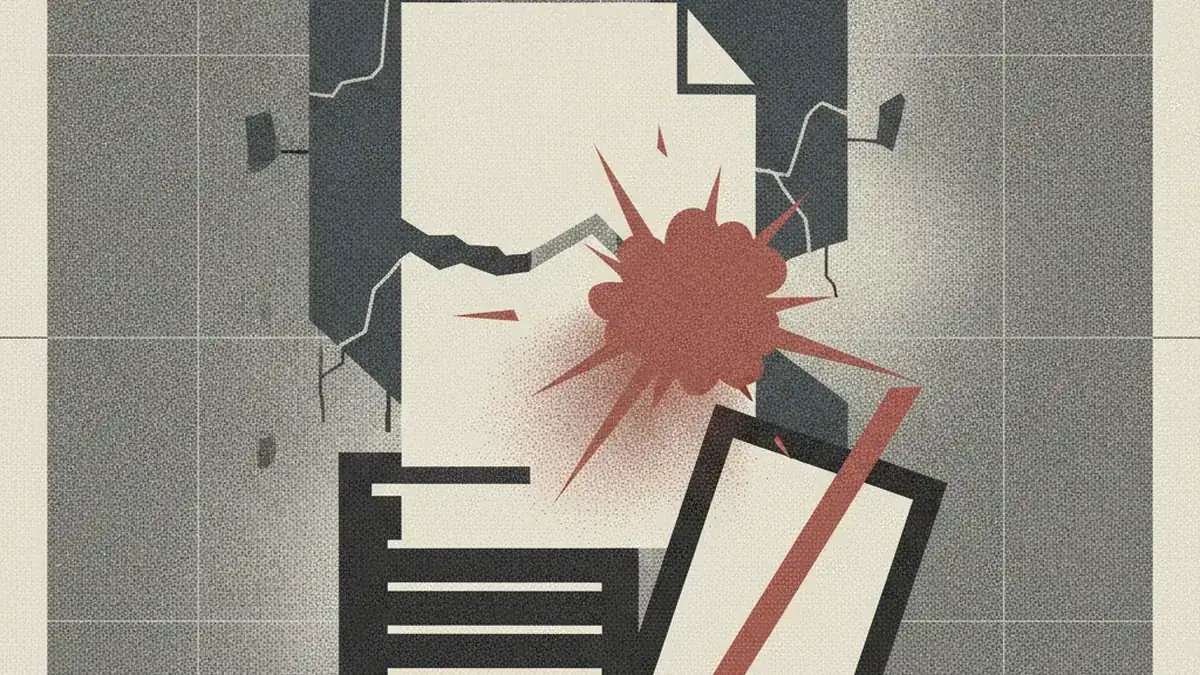
If you want the single clearest demonstration that precision and accuracy are different things from correctness, this is it. The weapons worked exactly as designed. They hit precisely the building they were aimed at. Four hundred people died because the building was the wrong one.
What happened
Amiriyah is a residential district in western Baghdad. The structure there was a reinforced civil defence shelter, built to protect civilians from air attack, and it was being used for exactly that during the Gulf War air campaign.
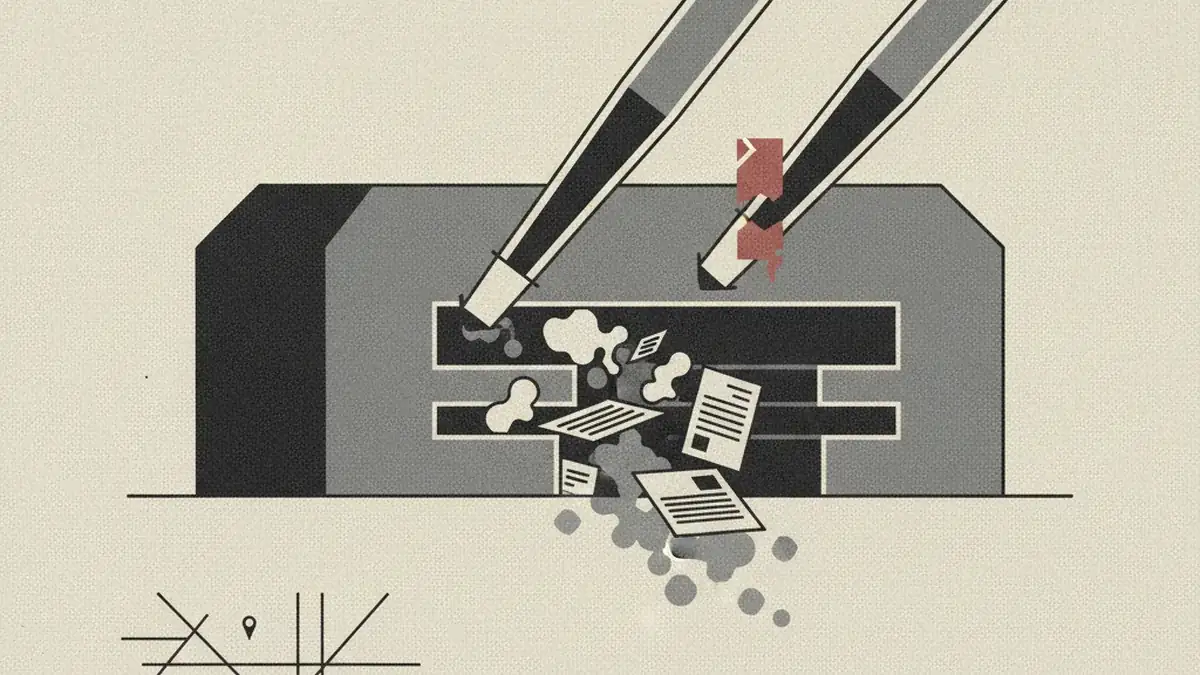
In the early hours of 13 February 1991, two laser-guided bombs struck it. The first penetrated the reinforced roof; the second followed through the opening it had made. The interior was sealed and the people inside could not get out.
The toll
The figure most commonly cited is around 408 civilians killed. The great majority were women and children, families who had gone there precisely because it was the designated place of safety in their neighbourhood.
The American account
The United States said the building had been identified by intelligence as a hardened military command and communications facility. Officials pointed to features consistent with military use: reinforcement, a perimeter, and what was described as camouflage painting.
The position taken was that the site was a legitimate military objective and that the presence of civilians inside was not known. On that account the deaths were incidental harm rather than the object of the attack.
What was disputed
- Whether it was in military use at all. Iraqi authorities and residents said it had been a public shelter throughout, and that families used it nightly.
- Whether that was knowable. Hundreds of people entering a building each evening is not a subtle pattern, and surveillance of Baghdad was extensive.
- Whether precautions were taken. The rule requires feasible steps to verify a target and reduce harm before striking.
The precaution rule is the one this case turns on, more than distinction or proportionality.
Precision, accuracy, correctness
Three things people run together
- Precision: the weapon lands where it was aimed. Achieved here, exactly.
- Accuracy: the aim point matches the intended target. Also achieved.
- Correctness: the intended target was the right one. This is what failed.
No improvement in guidance technology would have saved anyone in that shelter. This is the whole argument of the page on why precise weapons still kill civilians, and Amiriyah is its cleanest historical example.
What followed
| Question | Answer |
|---|---|
| Independent investigation? | None held |
| US inquiry published? | No public finding of fault |
| Anyone charged? | No |
| Position revised since? | Not formally |
| The site today | Preserved as a memorial |
The shelter was kept as it was, with the damage left visible, and the names of the dead recorded there. It is one of the few incidents in this index with a permanent physical memorial at the place it happened.
Which category this belongs in
This is a genuine collateral-damage case, in the strict sense of the term, and it is included here for that reason. Nobody has produced evidence that the intention was to kill civilians. The failure was in target identification and in the precautions that identification is supposed to involve.
That classification does not make it a lesser event. 408 people died because a judgement was wrong, and no process ever tested whether the judgement was reasonable. A case can be collateral damage and still be an unanswered failure of care.
Why no independent inquiry ever happened
The absence is structural rather than mysterious, and the reasons are the ones that recur throughout this archive.
The strike happened during an active air campaign run by a coalition whose members were not going to investigate each other. Iraq, the state whose civilians had died, had no standing to compel anything from the party responsible and every incentive to maximise the account. There was no international body with both jurisdiction and access, and the evidence that would have settled the question, the targeting file and the intelligence assessment behind it, sat with the only party who could have opened it.
So the two accounts were left standing side by side, and three decades later they still are. The same four obstacles apply to nearly every case in this index.
Why a 1991 bombing still sets the terms
Because the explanation offered afterwards became the template. Outdated or mistaken intelligence identifies a civilian site as military; the strike is technically perfect; the deaths are described as incidental; no independent body examines it; the file closes.
That sequence recurs across this index and beyond it. Kunduz in 2015 and Minab in 2026 are both versions of it, thirty-five years apart, with the same final line about intelligence that no longer described what stood at the coordinates.
Questions people ask about this
How many died at the Amiriyah shelter?
Did the US accept responsibility?
Was this collateral damage or a massacre?
Where this comes from
- Amiriyah shelter bombing — Wikipedia
- Rules on precautions in attack — International Committee of the Red Cross
Spotted something wrong? Tell us and we will fix it.