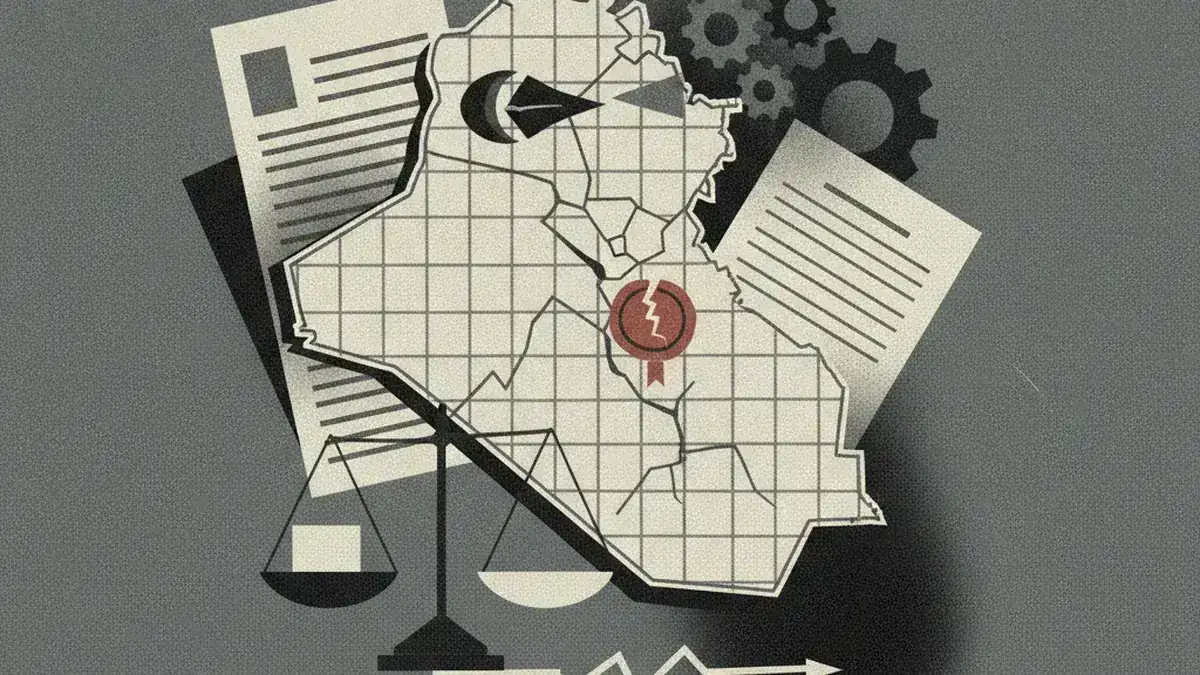
Every argument about this airstrike eventually arrives at one sentence: the crew acted within the rules of engagement. It is worth knowing what that sentence actually claims, because it is narrower than most people assume and it is not the same as saying the shooting was right.
What rules of engagement are
Rules of engagement are orders issued by commanders that tell forces when they may use force, against whom, and with what. They translate the law of armed conflict, plus policy and political judgement, into instructions a soldier can act on in seconds.
Two things follow that people often get wrong. Rules of engagement are not themselves law: breaking them is a military disciplinary matter, not automatically a war crime. And they can be, and frequently are, stricter than the law requires. What they can never be is looser.
Two things people get wrong about them
- They are not law. Breaking them is a disciplinary matter, not automatically a war crime.
- They can be stricter than the law, never looser. A commander may tighten the standard; nobody may lower it below what the law of armed conflict requires.
The rules in Iraq in 2007
By 2007 the fighting in Baghdad was a counter-insurgency in a city full of civilians. The rules reflected that. Broadly, forces could use force in self-defence, and could engage people identified as hostile, with specific requirements before doing either.
Two requirements matter for this case.
- Positive identification. Before engaging, a crew had to be reasonably certain the target was a lawful one. Not sure beyond all doubt, but reasonably certain on the information available.
- Clearance. For an engagement like this one, approval from a controlling authority was expected. You can hear that process happening on the recording.
Both were followed in form that morning. The crew stated an identification and asked for clearance, and clearance was given. Whether the identification met the substance of the standard is the argument covered in the analysis.
The law the rules sit on top of
Underneath the orders is the law of armed conflict, and three of its rules apply here. Each has a plain-English entry in the glossary, and each is tested by a different part of that morning.
| Rule | What it requires | Which phase it tests |
|---|---|---|
| Distinction | Tell civilians from fighters; only attack fighters | The first burst |
| Protection of the wounded | Do not attack those out of the fight, or generally those collecting them | The van |
| Proportionality | Expected civilian harm must not be excessive against the advantage | The building |
Each phase of that morning runs into a different rule, which is why this archive keeps them apart. The van and the building have separate pages for exactly this reason.
Declared hostile, and why it matters
There is a category in military practice for a group that has been assessed as hostile, which allows forces to engage its members on sight rather than waiting for them to act. It is a significant step, because it shifts the test from what a person is doing to what they have been assessed to be.
A great deal of the defence of the first burst leans on something close to this reasoning: armed men, in a contested district, near troops in contact. Whether a category like that can carry the weight put on it is the subject of the page on collateral damage. The difficulty is that the reasoning is only as good as the identification underneath it, and the identification came from a sensor that is poor at exactly that job.
Why "within the rules" answers less than it sounds
Three different questions
Did the crew follow their orders? The Army says yes. Were those orders lawful? Nobody has seriously argued otherwise. Was the result lawful in this instance? That was never tested by a court, and it is not the same question as the first.
A finding that a crew acted within the rules is a finding about compliance. It does not establish that the people killed were lawful targets, only that the crew's conduct was consistent with their instructions given what they believed. That is why the Army investigation could clear the crews while leaving almost everyone else unsatisfied.
Holding that morning against the rules of engagement
Run the three phases past the requirements and you get three different answers, which is the honest result.
The first burst has a plausible identification that turned out to be wrong. The van has no visible basis for identification at all, and it runs into one of the oldest protections in the law. The building was hit with three missiles on a report of armed men going inside, with no public record of what the expected harm to anyone else was judged to be.
Whatever the paperwork concluded, those are not the same event, and no single sentence about rules of engagement covers all three. That is why the useful question is never whether the rules were followed, but which rule, in which minute, and with what actually in view.
Questions people ask about this
Are rules of engagement the same as the law of war?
What is positive identification?
Did the crew get permission before firing?
Where this comes from
- Rules of distinction, proportionality and protection of the wounded — International Committee of the Red Cross
- Department of Defense FOIA reading rooms — US Department of Defense
- The National Security Archive — George Washington University
Spotted something wrong? Tell us and we will fix it.