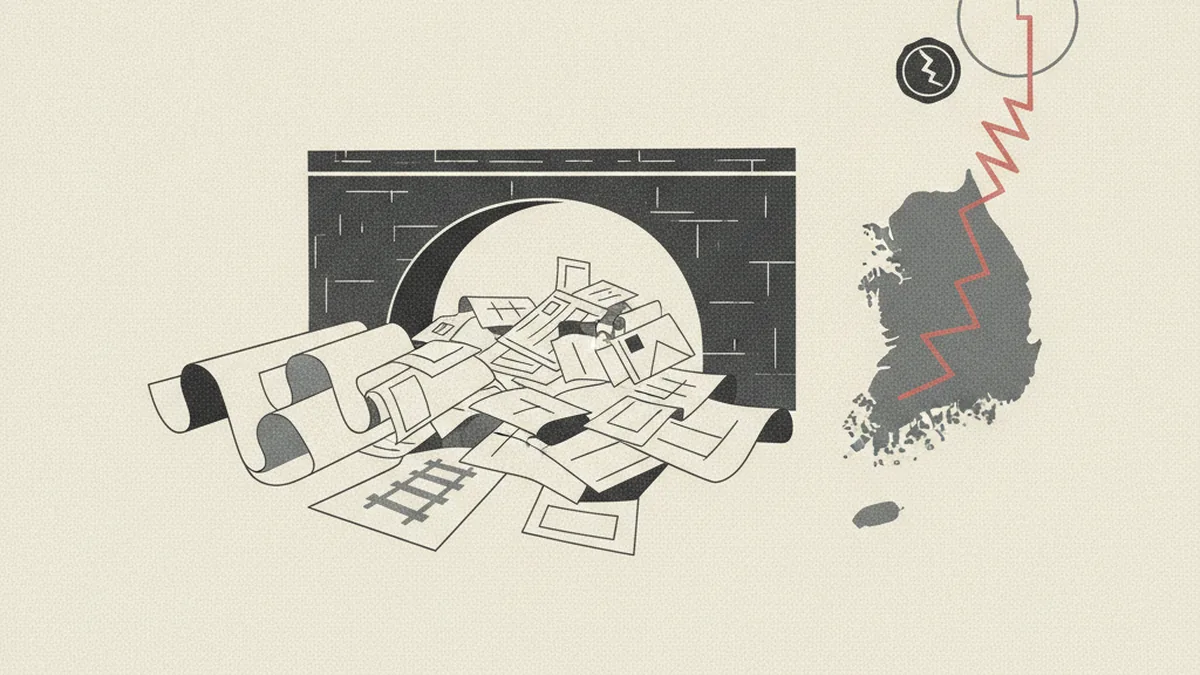
This is the case against which every other one is measured. Not because it was the largest, but because it was documented, investigated, prosecuted and still ended with almost nobody answering for it.
What happened
On the morning of 16 March 1968, soldiers of Charlie Company, 1st Battalion, 20th Infantry, part of the Americal Division, entered the hamlets of Son My in Quang Ngai province, South Vietnam. They expected to find a Viet Cong battalion.
There was none. Over about four hours the company killed unarmed villagers in their homes, in the fields and in a drainage ditch where groups were gathered and shot. The dead were overwhelmingly women, children, infants and elderly people. Women were raped. Livestock was killed and homes burned.
The toll
The US Army's inquiry put the number at 347. The memorial at the site lists 504 names. The difference has never been reconciled, and both figures are still in use.
The company suffered one casualty that day, a soldier who shot himself in the foot. For scale, that is roughly thirty times the death toll of the Baghdad airstrike of 2007, in a single morning.
The helicopter crew who interrupted it
An observation helicopter flown by Warrant Officer Hugh Thompson Jr, with crew members Glenn Andreotta and Lawrence Colburn, was overhead. Seeing what was happening, Thompson landed between advancing soldiers and a group of surviving villagers and ordered his crew to cover the soldiers while civilians were evacuated.
What it cost them at the time
Thompson reported what he had seen immediately. He was, for years afterwards, treated as a problem rather than a witness. It took three decades for the three men to be formally decorated for what they did that morning.
The account that was filed instead
The operation was reported up the chain as a successful engagement with an enemy force, with a body count that made it look like a victory. That account stood for twenty months.
It came apart because of two people outside the chain of command. A soldier named Ron Ridenhour, who had not been present but had heard accounts from those who were, wrote letters to Congress and the Pentagon. The investigative reporter Seymour Hersh then established and published the story in November 1969.
A pattern this archive keeps meeting
First account wrong, correction from outside, and a long delay. It is the same sequence as the 2007 Baghdad airstrike, where the internal inquiry closed in weeks and the recording reached the public three years later through a leak.
The prosecutions
| Stage | Outcome |
|---|---|
| Investigated | Around 25 officers and soldiers faced charges or referral |
| Tried | A handful; most charges dismissed |
| Convicted | One: Lieutenant William Calley, for the murder of 22 villagers |
| Sentenced | Life imprisonment with hard labour |
| Actually served | About three and a half years, mostly under house arrest |
A separate inquiry led by Lieutenant General William Peers examined the cover-up and found failures of reporting and command across several levels. It produced findings rather than convictions.
Which category this belongs in
There is no ambiguity here, and it is worth stating plainly because this index contains cases where there is. My Lai was not incidental harm during an attack on a military objective. There was no enemy force, no return fire, and the killing continued for hours at close range against people the soldiers could see were unarmed.
It is a massacre. Calling it collateral damage would misuse the term in exactly the way that makes the term useless.
The photographs, and what they changed
An Army photographer, Ronald Haeberle, was with the company and carried two cameras: a service camera for official images and his own for colour film. The colour photographs he kept showed the dead in the open, in groups, and were published in late 1969.
Their effect is the reason this archive keeps returning to the question of images. The written account existed first and moved almost nobody; the photographs made the account impossible to hold at a distance. The same mechanism operated in April 2010, with footage instead of stills, and it is the clearest precedent for what the Baghdad recording did four decades later.
What the My Lai massacre established, and what it did not
It established that an army could investigate itself seriously: the Peers inquiry was thorough and its findings were damning. It established that reporting works, twenty months late.
What it did not establish is that any of this leads to consequences. Somewhere between 347 and 504 people were killed in one morning, and one man served three years in his quarters. Every case in this index since has been measured against that outcome, and most have not matched even it.
Questions people ask about this
How many people died at My Lai?
Was anyone punished?
How did it become public?
Where this comes from
- My Lai massacre — Wikipedia
- Rules on distinction in armed conflict — International Committee of the Red Cross
Spotted something wrong? Tell us and we will fix it.