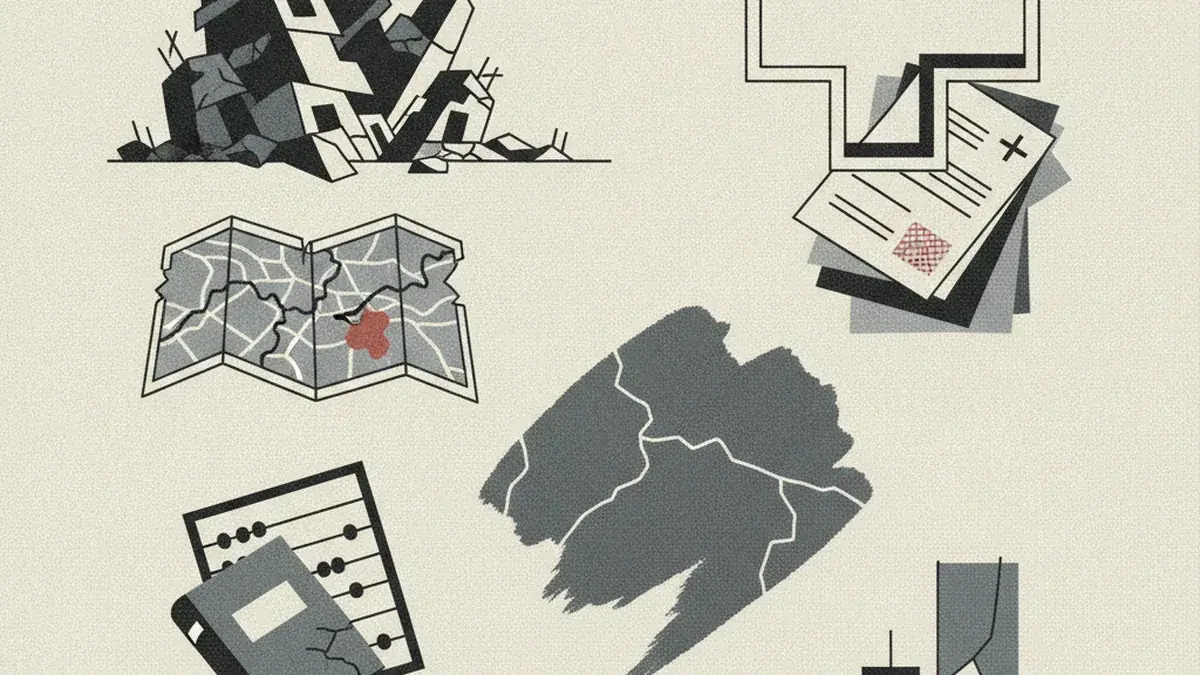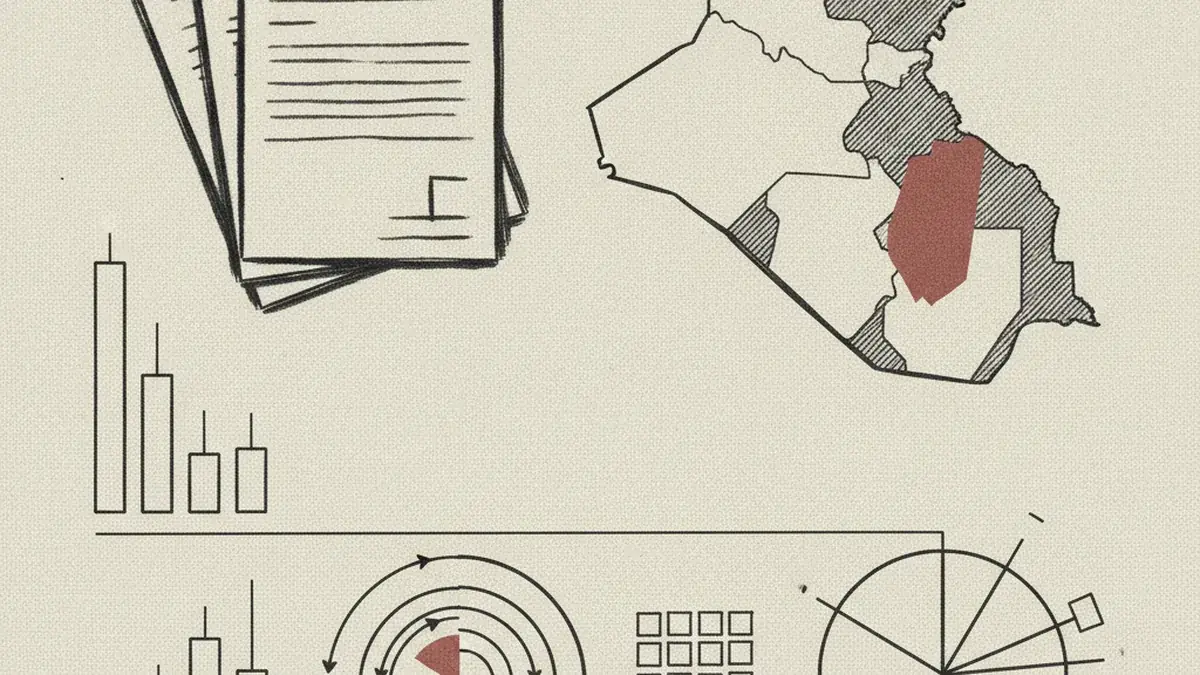
Ask how many Iraqi civilians died in the war and you will get answers ranging from a couple of hundred thousand to over a million. People treat that spread as evidence that somebody is lying. It is mostly evidence that four groups are measuring four different things.
Four ways of counting
| Method | How it works | Direction of error |
|---|---|---|
| Documented deaths | Counts deaths confirmed by cross-checked reports and records | Undercounts, by design |
| Household surveys | Samples households, asks about deaths, scales to the population | Wide margins; sensitive to sampling |
| Official records | Morgue, hospital and ministry data | Undercounts; collapses where institutions fail |
| Military records | Incidents recorded by forces in the field | Partial; classifies the dead by assessment |
A documented-death count and a survey estimate are not rival answers to one question. One says how many deaths can be individually evidenced; the other estimates how many occurred. The second will always be larger and should be.
Why a range is the honest answer
A documented count and a survey estimate are not rival answers to one question. One says how many deaths can be individually evidenced; the other estimates how many occurred. The second will always be larger, and should be.
What a documented count does well
It gives you names, dates and places, and each entry can be checked. That makes it almost impossible to dismiss, which is why it has been so useful in arguments about specific incidents, including this one.
Its weakness is structural. If nobody reported a death, or only one source did, it does not appear. In the worst periods of 2006 and 2007, whole districts were too dangerous for anyone to report from.
What surveys do well, and badly
A well-designed household survey can capture deaths nobody reported, which is the great blind spot of documented counting.
It also carries real uncertainty. Clusters can be unrepresentative, wartime sampling is extremely difficult, and recall varies. Published estimates for Iraq using this method have differed from each other by large factors, and their confidence intervals are wide. Quoting the central figure without the interval, which happens constantly in both directions, misrepresents the finding.
What the leaked records changed
Roughly 15,000 people who were not in any count
The Iraq field reports published in 2010 contained records of civilian deaths that appeared in no public dataset. Analysts identified around fifteen thousand of them. The reports also showed that individual deaths were being recorded internally, which sat awkwardly with the public position that such figures were not tracked.
This is the clearest example anywhere of a leak changing a factual record rather than a political argument.
Counting a single incident
The same problems appear in miniature on 12 July 2007. Totals for that morning run from about twelve to about eighteen.
- The first burst killed at least eight or nine; the exact number is uncertain.
- The van killed two, both named.
- The missile strike on the building killed an unknown number and produced no names at all.
The third line is why no total is firm. An archive that gave you a single confident number would be inventing the part nobody established.
Why this incident has no single figure
The first burst killed at least eight or nine. The van killed two, both named. The missile strike killed an unknown number and produced no names at all. That third line is why no total for the day is firm.
The classification problem underneath all of it
Every count has to decide who was a civilian, and in an insurgency that decision is often genuinely unclear rather than merely contested.
Military records classify the dead by assessment at the time, which means a person identified as a fighter when the report was written stays a fighter in the data even if that identification was wrong. Documented-death projects usually require evidence that someone was a civilian, which pushes the other way. Surveys mostly ask households about deaths without attempting the distinction at all.
The 2007 airstrike shows the problem in one frame. At least one man in that street appears to be carrying a launcher. Two were journalists. Most of the others were never identified either way, and how they are counted depends entirely on which project is doing the counting and what it assumes about a group of men standing on a corner in a district where there had been fighting all week.
Using a casualty figure honestly
Four habits cover almost everything. Say which count you are using. Say what it counts, civilians only or everyone. Give the uncertainty rather than the midpoint alone. And do not treat a documented count as a ceiling, because it was never designed to be one.
What every casualty estimate leaves out
Names. That is the thing counting cannot do, and it is not a flaw in the method so much as a limit of the exercise.
In this one incident, four people are named in nearly every account, and all four are named for reasons unrelated to how they died: two worked for an international news agency, one was their rescuer, and two were his children. Everyone else in that street is a figure in a range. Which is why this archive keeps a page of names next to the pages of numbers, and why the phrase collateral damage does the work it does.
Questions people ask about this
Why do Iraq casualty estimates vary so much?
What did the leaked field reports add?
How many died in the 2007 airstrike?
Where this comes from
- Iraq Body Count — Iraq Body Count project
- The Guardian's Iraq war logs coverage — Guardian News and Media
- Human Rights Watch reporting on Iraq — Human Rights Watch
Spotted something wrong? Tell us and we will fix it.