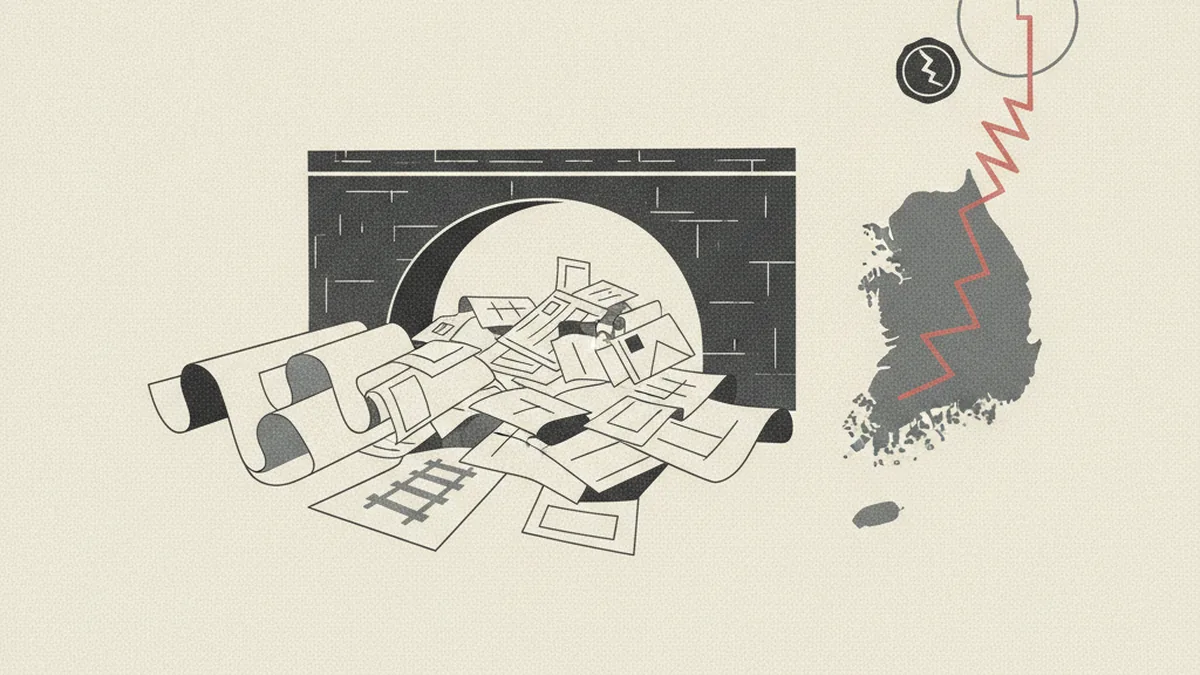
This case matters for a reason unrelated to its size. It sat outside the record for almost fifty years, and it only entered it because survivors kept insisting and a news agency eventually listened.
What happened
In late July 1950, a month into the Korean War, US forces were retreating under pressure. Large numbers of South Korean civilians were moving south along the same roads.
Near the village of No Gun Ri, a group of refugees was stopped and directed towards a railway bridge. Between 26 and 29 July, they were fired on there by US troops and from the air. People sheltered in the culverts beneath the bridge while the shooting continued over several days.
The disputed toll
| Source | Figure |
|---|---|
| South Korean government certification | About 150 dead or missing, plus 55 wounded |
| Survivor and villager accounts | Around 400 |
| US Army review, 2001 | An unknown number, not established |
The certified figure counts only those individually evidenced fifty years later, which is a floor rather than an estimate. This is the standard gap between documented and actual counts.
The orders that existed
What makes No Gun Ri harder to dismiss than a single panicked unit is the documentary trail around it. Instructions circulated in that period directing that civilians approaching American lines be treated as hostile, on the reasoning that infiltrators were moving among refugee columns.
That fear was not invented. It is also, precisely, the reasoning that the rule of distinction exists to constrain: the difficulty of telling fighters from civilians is the problem the law addresses, not an excuse for abandoning the attempt. The rule is set out here.
How it reached the record, fifty years late
Survivors petitioned South Korean and American authorities for decades without result. The account entered the international record in 1999, when an Associated Press investigation established it using US archival documents and interviews with American veterans who had been present.
Why the veterans mattered
Survivor testimony alone had been discounted for fifty years. It was corroboration from soldiers who had been on the other side of the guns, together with the paper trail, that made the account impossible to set aside. The same asymmetry runs through every case in this index.
- 1950s to 1990s: survivors petition South Korean and US authorities without result.
- 1999: an Associated Press investigation establishes the account from US archives and veteran interviews.
- 2001: a joint review accepts that US forces killed civilians there.
The official response
A joint US and South Korean review reported in 2001. It accepted that South Korean civilians had been killed by American forces at No Gun Ri. It concluded the killings were not a deliberate policy and described the episode as an unfortunate tragedy of war.
No prosecutions followed. A statement of regret was issued; survivors' groups rejected it as falling short of an apology and of compensation.
Which category this belongs in
Contested, and honestly so. The victims were unarmed civilians fired on over days at close range, which points to massacre. The review found no deliberate policy to kill civilians as such, and the orders that existed were framed around infiltration rather than extermination.
The fair description is a case where standing instructions made an atrocity likely, and a unit carried it out. That is a different thing from My Lai, where no order was needed and none existed, and it is also not an accident.
What the 2001 review was not built to settle
The joint review established that American forces killed South Korean civilians at No Gun Ri. That was itself a significant admission after half a century of denial.
What it could not do was resolve intent, and it did not have the tools to try. It had no power to compel testimony, the unit records from those days were incomplete, and the surviving witnesses on both sides were recalling four days in 1950 from a distance of fifty years. A review operating under those constraints can establish that something happened and struggle to establish why.
That limitation recurs across this index. An inquiry convened long after the fact, by a party with an interest in the answer, will usually arrive at the mildest finding the evidence permits. The same is true of inquiries convened within weeks.
Why the No Gun Ri massacre belongs in this index
Because for fifty years it was not documented at all, and that is the more common condition. The events at No Gun Ri did not change; what changed was that archival records were opened and veterans spoke.
Every entry in this index reached it because something made it legible: a camera, a register, a reporter, an archive. The cases that never became legible are not absent because they did not happen. That is worth holding on to when reading a case that only exists in public because a recording escaped.
Questions people ask about this
How many died at No Gun Ri?
Did the US apologise?
How did the case become public?
Where this comes from
- No Gun Ri massacre — Wikipedia
- Rules on distinction in armed conflict — International Committee of the Red Cross
Spotted something wrong? Tell us and we will fix it.