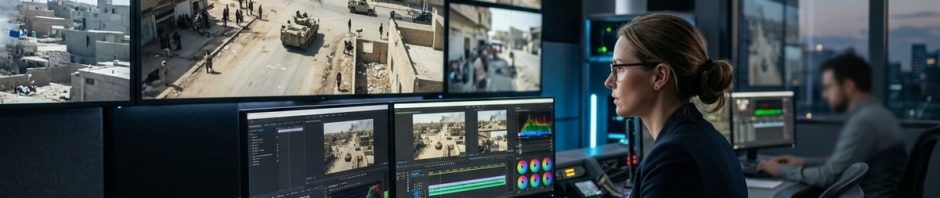
War footage has a unique ability to pull viewers into a moment they would otherwise only hear about. It can turn distant headlines into immediate empathy or anger, and it can also spark questions about ethics, context, and accuracy. At CollateralMurder.com we document a controversial war video, offer resources and timelines of Iraq war events, and examine civilian casualty statistics and broader conflict impacts. Our goal is not to sensationalize but to illuminate how visual journalism shapes public opinion, policy debate, and the everyday choices people make about what to believe and how to act.
Understanding how footage moves a public conversation
War footage is not just a recording of events; it becomes a lens through which viewers interpret those events. Several dynamics often work together to drive public response:
- Immediate emotional impact: A single frame or moment can evoke a strong visceral response that sticks with viewers longer than a written report. This emotional salience can push audiences to demand accountability or policy change.
- Context and framing: The way footage is presented, including accompanying narration, captions, or expert commentary, guides how viewers interpret what they see. Two clips showing similar actions can lead to very different conclusions depending on framing.
- Narrative discontinuities: Short clips leave out complex context, which can fuel misperceptions. Conversely, well annotated curations that provide timelines and sources can help readers understand what happened before and after a moment in the footage.
- Memory and identity: Public opinion is shaped by personal, cultural, and national memories of conflict. Footage can reinforce or challenge those memories, contributing to a broader civic discourse about legitimacy and obligation.
The psychology of immediacy
- Visuals shortcut analysis: Humans are wired to respond to faces, movement, and action. Footage leverages this instinct to generate rapid judgments about danger, intent, and morality.
- Affective resonance over statistical resonance: Numbers about casualties can inform, but images of civilians or combatants in distress are more likely to be remembered and shared.
- Cognitive load and simplification: Viewers often rely on quick takes rather than nuanced explanations when overwhelmed with information. This makes strong visuals particularly consequential.
Narrative framing and selective disclosure
- What is shown versus what is omitted: A clip can illuminate a fact or obscure the bigger picture. The difference between a moment of violence and the preceding causes, or subsequent outcomes, matters for how audiences understand accountability.
- Labels and language: Descriptors such as “collateral damage,” “civilian casualties,” or “engagement rules” carry connotations that steer interpretation.
- Temporal framing: A moment in time can be juxtaposed with other moments to imply causation, escalation, or resolution, even when the broader sequence is more complex.
The role of context and metadata
- Metadata matters: Time stamps, locations, sources, and corroborating documents provide essential context that helps viewers verify what they see.
- Cross-referencing with timelines: When footage is pared against established timelines of events, the public can assess how representative a snippet is of ongoing events.
- Open data and transparency: Access to source documents and independent analyses fosters a more informed audience and reduces the chance of misinterpretation.
How media outlets and platforms shape the story
The journey from raw footage to public opinion is mediated by editors, platforms, and distribution algorithms. Here are core forces at play:
- Gatekeeping and editorial choices: Editors decide what to publish, how to frame it, and which voices to include. This shapes the narrative skeleton that audiences encounter.
- Algorithmic amplification: Social media feeds often prioritize engagement. Content that provokes strong reactions can spread faster, even when it lacks full context.
- Ethics of clipping and excerpting: Short clips can reach broad audiences, but they may distort intent or omit crucial details. Responsible editors seek balance and verify content before sharing.
- Platform policies and moderation: Community guidelines affect what gets flagged, restricted, or removed. Public discussion can be shaped by the rules in place on a given platform.
- Citizen journalism and crowd-sourced interpretations: Eyewitness reports, image edits, and commentary from non-professionals contribute to the mosaic of public understanding. While this enriches perspectives, it also increases the need for fact checking and verification.
The ethics of clipping and commentary
- Respect for subjects: Using footage responsibly means considering the dignity and privacy of people who appear on camera.
- Avoiding sensationalism: Framing that focuses on gore or shock value can undermine the complexity of what occurred and the human consequences involved.
- Providing context: When possible, accompany clips with background information, source notes, and links to timelines or reports.
The power and responsibility of open data
- Open access builds trust: Providing timelines, casualty figures, and methodological notes helps the public assess credibility.
- Transparent sourcing reduces misinformation: Clear citations and verifiable data make it easier for readers to follow the chain from footage to conclusion.
Case studies and timelines from the Iraq war
The Iraq war presents a dense tapestry of events, responses, and interpretations. For researchers and curious readers, a careful, layered approach helps reveal how footage interacts with fact, memory, and policy.
The CollateralMurder case and its aftermath
- The video at the heart of this site sparked intense debate about rules of engagement, civilian safety, and the criteria used to classify who is a threat.
- Public reactions ranged from calls for policy reform to questions about journalistic ethics and state responsibility.
- The aftermath included ongoing discussions about transparency, verification, and accountability across military and media institutions.
Civilian casualty reporting and misperceptions
- Casualty numbers are frequently contested, with different sources offering varying tallies depending on methodology and scope.
- Footage can highlight specific incidents that sharpen focus on civilian harm, while broader statistics provide perspective on scale and trends.
- Accurate interpretation requires cross referencing with independent investigations, hospital and NGO reports, and government or military statements.
Policy responses and public opinion shifts
- Footage that surfaces or re-surfaces years after events can influence policy debates about accountability, conduct of hostilities, and media literacy.
- Public opinion can be swayed by the perceived credibility of sources, the novelty of the footage, and the degree to which the content aligns with existing beliefs or national narratives.
- Legislative and diplomatic responses often hinge on a combination of evidence, political will, and media pressure.
Tools of analysis for researchers and readers
To navigate war footage responsibly, use a toolkit that emphasizes verification, context, and credible synthesis.
Timelines, sources, and cross referencing
- Build a chronology: Create a timeline that places footage within the larger sequence of events.
- Verify with multiple sources: Compare footage metadata, independent reporting, NGO investigations, and official statements.
- Map causal links: Distinguish between direct actions, intended outcomes, and collateral consequences.
Data visualization and open data
- Visualizations can illuminate patterns: casualty trends, geographic distribution, and incident frequency over time.
- Open data fosters collaboration: When data is accessible, researchers can replicate analyses and challenge misleading narratives.
Verifying authenticity and handling misinformation
- Check provenance: Confirm the origin of the footage and whether it has been altered or misrepresented.
- Seek corroboration: Look for additional footage, witness accounts, or official documents that corroborate or challenge what is shown.
- Be cautious with memes and edits: Edited clips, miscaptioned screenshots, and doctored imagery are common on crowded platforms.
Ethical considerations in war footage
Ethics lie at the core of how we present and discuss war footage. The way a moment is captured and shared can have real consequences for people on the ground and for the public discourse that shapes policy.
Dignity of subjects and permissions
- Consent and privacy: Civilians and combatants alike deserve respectful treatment when footage is used, especially in sensitive contexts.
- Avoiding sensationalization: Prioritize informative, context rich storytelling over lurid or exploitative portrayal.
Impact on veterans and civilians
- Memory and trauma: Exposure to graphic or repeated imagery can affect veterans, families of victims, and bystanders.
- Public accountability: Responsible reporting can support justice and reforms that reduce harm in future actions.
Legal frameworks and international law
- Distinctions between combatants and non combatants: International humanitarian law emphasizes protection of civilians unless they lose protection due to their own actions.
- Proportionality and necessity: Content that examines the ethics of engagement must consider whether force used was proportionate to the objective and necessary to achieve it.
Practical takeaways for viewers
Engaging with war footage in a thoughtful way helps ensure a well informed public discourse.
What you can do with war footage
- Seek fuller context: Look for timelines, background reports, and multiple perspectives before forming conclusions.
- Cross check numbers: Compare casualty tallies across independent sources and official statements.
- Read beyond the clip: Look for the events that precede and follow a moment in the footage to understand causation and consequences.
How to discuss it responsibly
- Use precise language: Avoid sensational adjectives or moral absolutes that oversimplify complex situations.
- Acknowledge uncertainty: If a fact is disputed or unknown, state that clearly and point to the best available sources.
- Center human impact: Highlight the experiences of civilians and soldiers alike, and be mindful of how language affects perceptions.
How to factor in statistics on civilian casualties
- Compare timeframes: Year by year or conflict phase comparisons can reveal trends.
- Consider methodology: Different groups may use different definitions of what counts as a civilian casualty or an incident.
- Use ranges and confidence intervals when presenting numbers to reflect uncertainty.
SEO and content strategy for this topic
If you are a reader or researcher exploring war footage and public opinion, a few strategic approaches help maximize clarity and reach.
Keywords to target
- war footage impact on public opinion
- ethics of visual journalism
- Iraq war timelines
- civilian casualty statistics
- how media shapes perception of war
- CollateralMurder case study
- verification in video reporting
- open data war reporting
Content formats and repurposing
- Timelines and data dashboards: Create accessible, visual summaries of events and casualty statistics.
- Expert interviews and roundups: Publish conversations with scholars, journalists, veterans, and human rights researchers.
- Educational resources: Develop primers on media literacy, verification techniques, and ethical guidelines for handling war footage.
- Multimedia walkthroughs: Produce annotated video essays that explain the context of key moments, with references to primary sources.
A note on the CollateralMurder perspective
CollateralMurder.com is dedicated to documenting a controversial war video while providing resources and timelines that help readers understand the Iraq war more holistically. The site emphasizes transparency, open data, and critical analysis of how footage travels from the field to the public sphere. By presenting multiple viewpoints, linking to corroborating sources, and discussing the ethical implications of sharing and interpreting war imagery, we aim to foster a responsible, informed conversation about war, media, and public accountability.
Conclusion: contending with a powerful visual record
War footage remains one of the most potent forms of truth telling available to the public. It can compel action, spark reflection, and expose the human costs of conflict. Yet it also demands discipline. Without context, verification, and a commitment to ethical storytelling, images risk misinforming or inflaming audiences.
At CollateralMurder.com we invite readers to approach war footage with curiosity and care. Use the resources we provide to cross reference events, understand civilian casualty statistics, and examine broader conflict impacts. Engage with timelines, data visualizations, and scholarly or NGO analyses to build a nuanced picture that goes beyond a single clip.
If you are a student, journalist, or citizen researcher, here are five practical steps to keep in mind as you study war footage:
1) Start with context. Gather timelines and background information before evaluating a clip.
2) Verify before sharing. Check multiple independent sources and original documents.
3) Respect the subjects. Consider the dignity and privacy of people who appear in the footage.
4) Acknowledge uncertainty. Be clear about what is known, what is disputed, and what remains unclear.
5) Use the data and narratives to inform constructive dialogue. Seek solutions, not just conclusions.
The conversation about how war footage shapes public opinion is ongoing and essential. By prioritizing accuracy, context, and ethics, we can honor the complexity of the events we study and contribute to a more informed and accountable public discourse.