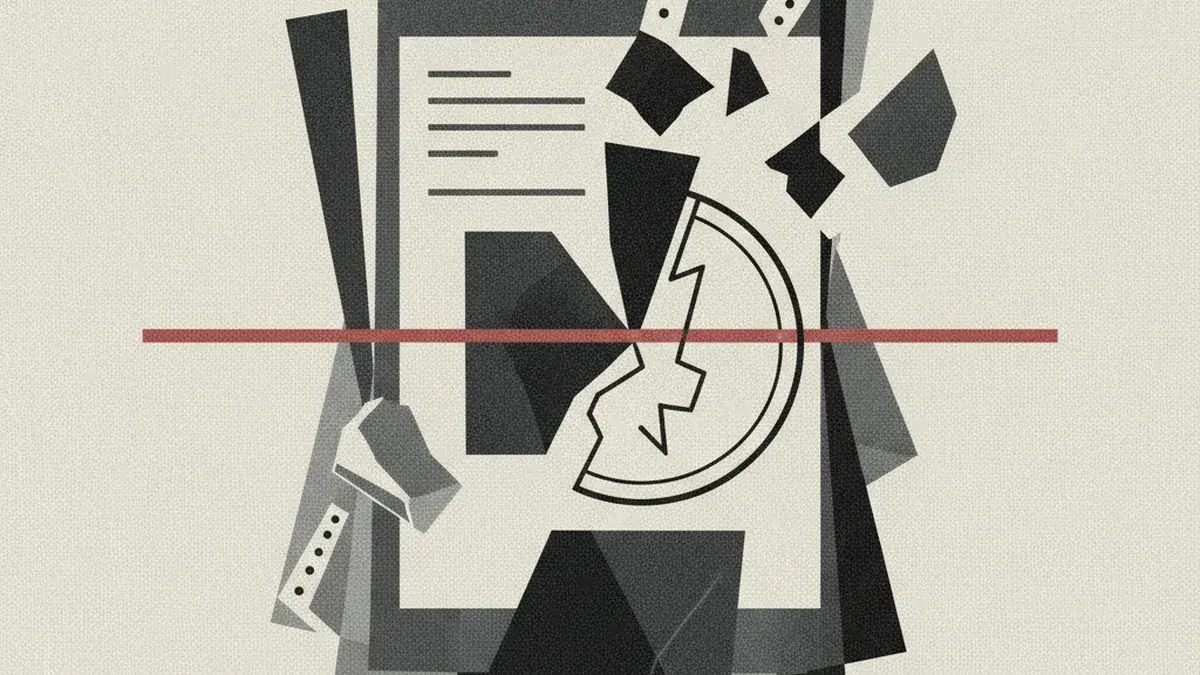
Few phrases in English are as disliked as this one, and much of the dislike comes from a misunderstanding. Collateral damage is not a phrase that excuses civilian deaths. It is the name of a category, and whether harm in that category is lawful depends on rules that are stricter than most people realise and weaker than most people would like.
What the phrase actually means
Harm to civilians or civilian property that was not the object of an attack. That is all. It says the harm was incidental rather than intended.
It does not say the harm was acceptable. Incidental harm can be entirely lawful, or it can be a serious violation, and the difference is decided by rules applied to the specific attack.
What the phrase does not say
It says the harm was incidental rather than intended. That is all. It does not say the harm was acceptable, and whether it was lawful is decided by rules applied to the specific attack.
The three rules that decide it
| Rule | What it requires | Which part of 12 July it tests |
|---|---|---|
| Distinction | Separate civilians from fighters; attack only fighters | The first burst |
| Proportionality | Expected civilian harm must not be excessive against the military advantage | The missiles |
| Precaution | Take feasible steps to verify targets and reduce harm | All three engagements |
Notice that proportionality is not a headcount. It does not say that few deaths are fine and many are not. It weighs expected harm against expected military advantage, which is a judgement made before firing and assessed on what was known then.
- Distinction asks who you attacked.
- Proportionality asks what it cost against what it gained.
- Precaution asks what you did before firing to reduce the harm.
The rule that gets forgotten
Precaution is the least discussed and arguably the most relevant here. It requires doing what is feasible to check who you are attacking and to reduce harm: choosing a different weapon, waiting, taking another look, using a means that limits the blast.
Apply that to a crew using a sensor that cannot distinguish a camera from a launcher, firing a cannon designed for vehicles at people standing in a residential street. The question is not whether they believed their identification. It is what they were required to do before acting on it.
The gap between lawful and acceptable
The uncomfortable core of this subject
An attack can meet every legal test and still kill a photographer, a man who stopped to help a wounded stranger, and injure two children in a front seat. The law of armed conflict is not a promise that the innocent will be safe. It is a set of limits on how much risk may be transferred to them.
People who argue about this case often talk past each other because one side is answering the legal question and the other the moral one. Both are legitimate. They are not the same question and neither settles the other.
The ethical argument underneath the law
Two positions, roughly.
The first says intent matters enormously. Deliberately killing civilians is murder; accepting some risk to them while attacking a legitimate target is tragic but different in kind. Almost all modern military ethics rests on this.
The second says a system that reliably produces dead civilians while nobody is ever responsible has laundered the outcome. If every individual decision is defensible and the aggregate is thousands of deaths with no accountability, something has gone wrong that individual-level analysis cannot see. This case is the strongest evidence for that view.
Why the language matters
Bureaucratic phrasing does real work. A report saying an engagement resulted in collateral damage is accurate and simultaneously removes every person from the sentence. It is very difficult to feel anything about a category.
This archive tries not to do that, which is why pages here use names where names exist: Namir Noor-Eldeen, Saeed Chmagh, Saleh Matasher Tomal. The men killed in the first burst who were never identified show what the alternative looks like: they exist in the record only as a number in a range.
A report saying an engagement resulted in collateral damage is accurate, and removes every person from the sentence.Why this archive uses names wherever the record provides them
What collateral damage hides, and what the phrase is for
Both things are true at once. The phrase is genuinely necessary, because the law needs a way to distinguish intended killing from incidental harm, and that distinction protects people. It is also a phrase that lets an institution describe a morning like 12 July 2007 without a single person appearing in the sentence.
The way through is not to ban the term. It is to insist that every time it is used, someone asks the three questions underneath it: was the target lawful, was the harm proportionate, and was every feasible precaution taken. In this case nobody with authority ever had to answer the second and third in public, and the one inquiry that looked at it was not built to.
Questions people ask about this
Is collateral damage legal?
How is proportionality measured?
Does the term excuse civilian deaths?
Where this comes from
- Rules on distinction, proportionality and precautions — International Committee of the Red Cross
- Human Rights Watch reporting on Iraq — Human Rights Watch
- Iraq Body Count — Iraq Body Count project
Spotted something wrong? Tell us and we will fix it.