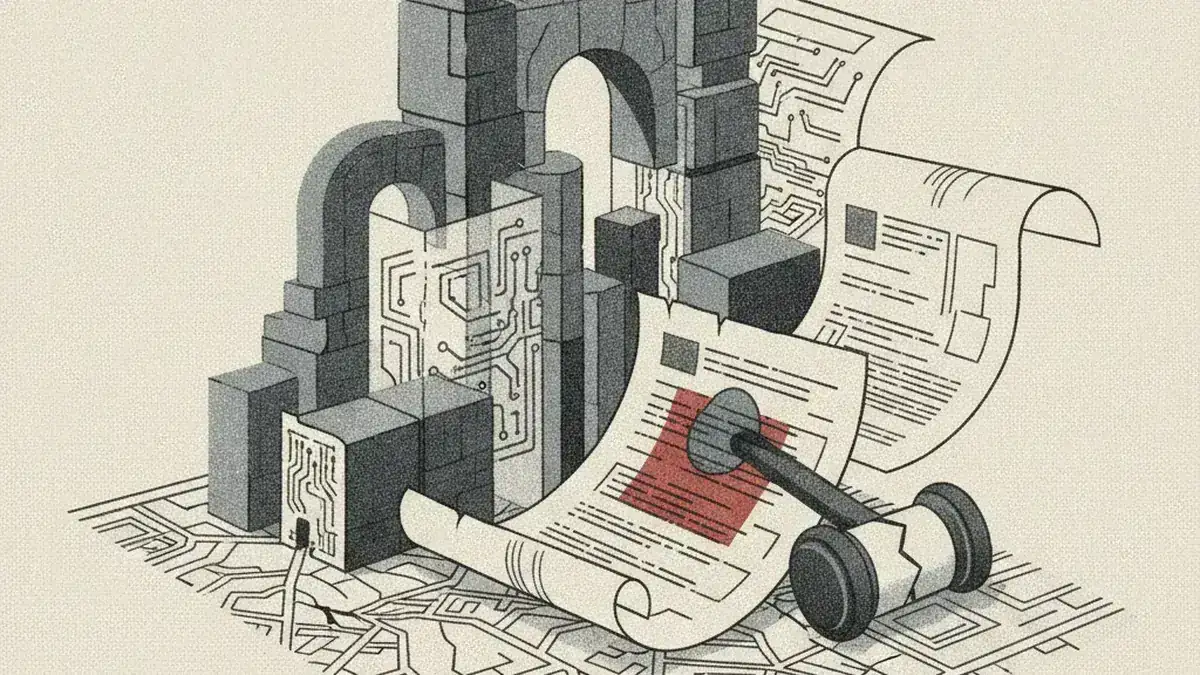
Before the leak, there was a lawful attempt. It went on for nearly three years, it was run by one of the largest news organisations in the world, and it failed completely. Any argument about whether the 2010 leak was necessary has to start here.
What Reuters asked for
Two of its staff had been killed. The agency wanted to know how, and it wanted to see the gun camera recording that it knew would exist, because such recordings always exist.
It began asking within days, informally through military press channels, and then formally under the US Freedom of Information Act. It also asked for the investigation file. Namir Noor-Eldeen and Saeed Chmagh were its own employees, and this was not an abstract public-interest request.
What it received
Briefings, partial answers, and an account of the engagement. What it did not receive was the recording.
Requests were refused, deferred, answered with material that did not include the video, or simply left to sit. This is not unusual. Freedom-of-information law in the United States has broad exemptions for national security and for investigatory records, and an agency that would rather not release something has a great many lawful ways to not release it and a great deal of time in which to not release it.
Why the refusal matters so much
The sequence that produced everything else
An internal inquiry cleared the crews in 2007 and was not published. The recording that inquiry was based on was withheld from the employer of two of the dead. There was no independent investigation and no route to one. In that situation, a leak is not a failure of the system. It is the only remaining output of it.
This is the argument even people who disapprove of WikiLeaks have found hard to answer. The lawful mechanism was used, by an organisation with the resources to use it properly, and it produced nothing in three years.
The detail that makes the refusal look worse
In 2009, while Reuters was still being told it could not have the footage, a book by a reporter who had been embedded with the ground unit was published. It described this engagement in detail and quoted the radio traffic from the cockpit.
So the recording and its transcript were available inside the military, and available enough that a journalist living with the unit could work from them, while the employer of two dead men was being refused. That book has its own page, and this is the single most awkward fact in the whole disclosure history.
The two facts that do not sit together
- Through 2008 and 2009 Reuters was refused the recording of how its two employees died.
- In the same period an embedded reporter had enough access to describe the engagement and quote the cockpit radio in a published book.
What happened when the video appeared
Reuters learned how its staff had died at roughly the same moment as everyone else, from a press conference in Washington held by an organisation it had no relationship with. The release was, from the agency's point of view, the answer to a question it had been asking officially since July 2007.
The agency renewed its call for a full and independent investigation. None was held. How Reuters and other newsrooms handled that morning is its own uncomfortable story.
Would it be different today?
Largely no, and this is the part people assume wrongly. No standing process was created after 2010 for releasing gun camera recordings of incidents in which civilians or journalists are killed. A news organisation in the same position today would file the same requests and face the same exemptions.
| Then | Now |
|---|---|
| No routine release of gun camera footage | Still none |
| Internal investigation, not published | Still the default |
| Broad FOIA exemptions | Unchanged |
| No independent body with access | Still none |
How a refusal is built
It is worth understanding the mechanics, because people imagine a dramatic denial and it is nothing like that.
A request goes in. It is acknowledged, then queued. An agency identifies which office holds the material, which can take months. That office reviews it against exemptions, and national security and ongoing-investigation exemptions are wide. Material is withheld in whole or in part. The requester can appeal internally, which takes further months, and then sue, which takes years and money.
At no point does anyone have to say no in a way that can be pointed at. The process simply outlasts the request. For a news organisation with staff to mourn and a story to file, three years of that is functionally a refusal, whatever the paperwork says.
The refusal Reuters never got past
It is worth holding the two halves of this together. A newsroom did everything correctly, for three years, and got nothing. An analyst broke the law once, and within weeks the whole world had seen it.
That contrast is the strongest argument the defenders of the leak have, and it was made not by them but by the refusals themselves. Every page in this archive about prosecutions, about publishing ethics, about what the footage does or does not show, sits downstream of a filing cabinet that stayed shut. What happened next began there.
Questions people ask about this
Did Reuters ever get the footage officially?
Why was it refused?
Could the same thing happen now?
Where this comes from
- Department of Defense FOIA reading rooms — US Department of Defense
- Reuters news archive — Thomson Reuters
- The National Security Archive — George Washington University
Spotted something wrong? Tell us and we will fix it.