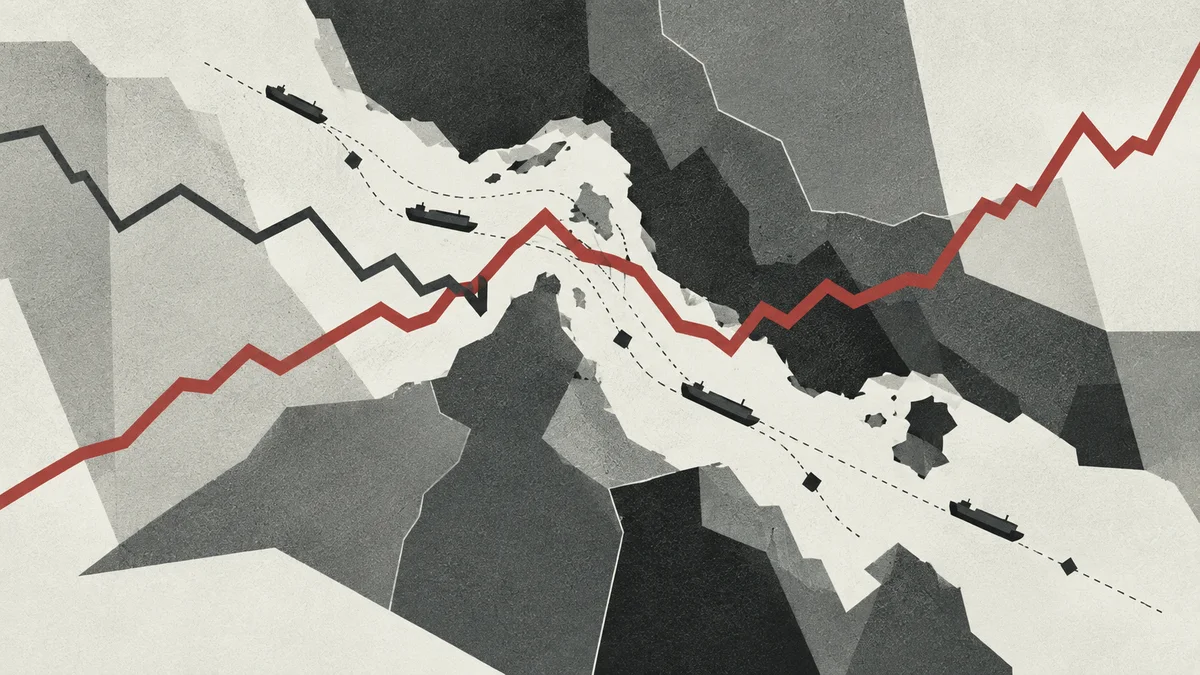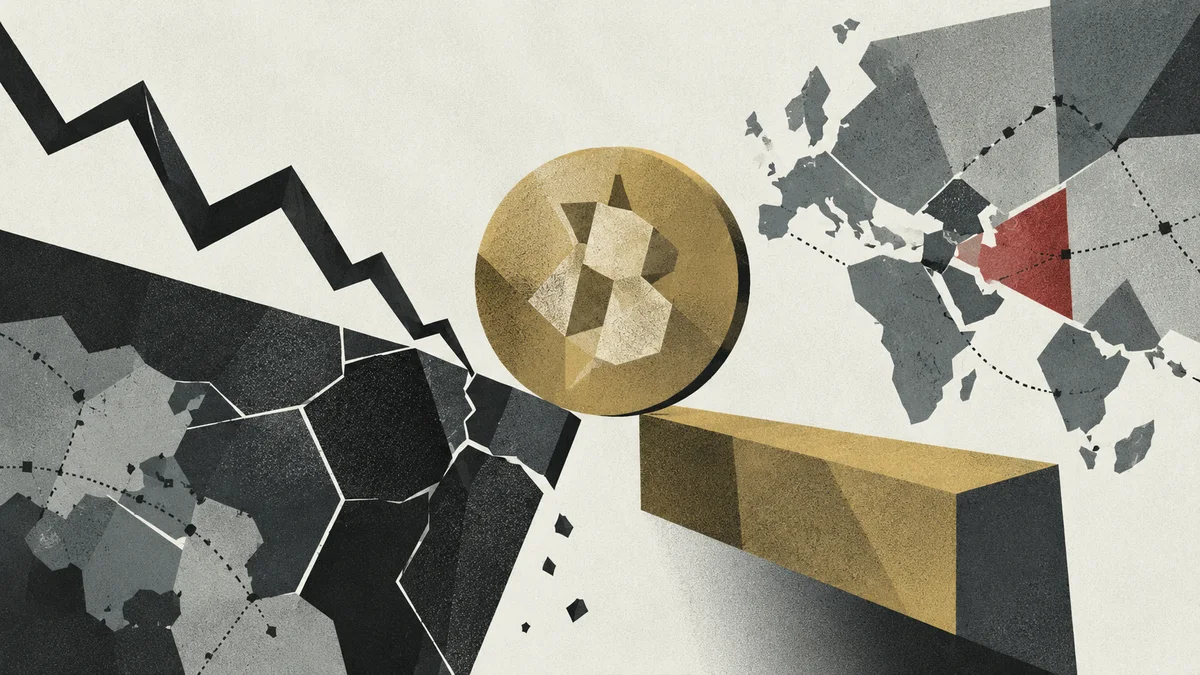
Endless war strengthens the story told about Bitcoin: no government can print more of it, no border is built into the network, and a person who controls keys can carry access in a small backup. A good story is a hypothesis. The market record has to decide whether it is also true.
What a safe haven has to do
A safe haven is defined by behaviour during bad periods. It should preserve value, or move against broad losses, when fear rises and ordinary risk assets fall. A high average return across calm years does not pass that test. Neither does one rally that happened during a war. Safety is a bad-state property, measured when protection is needed.
Three different claims
This separates terms that are often merged. A hedge offsets a named risk. A diversifier does not always move with the rest of a portfolio. A safe haven works during the stress window itself. Bitcoin could satisfy one claim in one period and fail another. The label depends on the asset it is compared with and the dates used.
| Label | Test |
|---|---|
| Hedge | Offsets a named risk |
| Diversifier | Usually moves differently from other holdings |
| Safe haven | Holds up during the stress window |
The live Bitcoin price supplies the observations, while Bitcoin.now's volatility tool shows how wide the moves are. Neither page declares the asset safe. They make the price, window and measurement visible so the claim can be tested against a world equity index, gold, cash or another stated benchmark.
What the 2026 Iran war test showed
When US and Israeli strikes on Iran began, Bitcoin.now recorded a large crypto sell-off on 28 February. That first move looked like a flight out of risk. Bitcoin then rebounded near $70,000 as markets reassessed the conflict.
The event window
The rebound did not settle the question. Bitcoin.now later documented another drop as the Iran conflict renewed. Reuters reported that the dollar drew safe-haven demand while cryptocurrencies fell during part of the same early-March stress. The changing answer across eleven trading days is itself evidence of unstable protection.
A June 2026 study in Economics Letters tested gold, Bitcoin, oil and European gas around the escalation. It found no consistent protection from Bitcoin in that short event window. Oil performed best, but the authors called it a war hedge: its price benefited directly from supply danger. That distinction fits the oil chart.
A price rise during a war does not by itself make an asset a safe haven.
Why the Bitcoin safe-haven case persists
Bitcoin's issuance follows public rules. The block subsidy halves on a known schedule, and total issuance approaches 21 million. The supply and halving guide explains the rule and its limits. Scarcity constrains supply; it does not order buyers to pay a higher price, set a floor or remove demand risk.
Protocol rules and market prices
Bitcoin is also portable in a specific sense. The network is global, and a valid transaction does not ask whether the sender crossed a national border. Self-custody can reduce dependence on one bank or broker, though the owner then carries the risks of key loss, theft and recovery failure. Settlement access can be resilient while local exchange access is blocked.
Keep two levels separate
The protocol determines valid transactions and new issuance. Buyers and sellers determine the exchange price. A rule at the first level does not guarantee an outcome at the second.
Those properties may matter greatly to one person facing capital controls or a failing payment system. That is a different claim from saying BTC protects a diversified portfolio during a world market shock. Individual utility and market-wide safe-haven behaviour can exist separately, and evidence for one should not be used as evidence for the other.
Why Bitcoin still trades like risk
Bitcoin trades every hour of every day. During a weekend shock, it may be one of the few liquid markets open. That makes it an early place to cut exposure or raise cash. A fall can therefore reveal its role as an available source of liquidity as much as a final verdict about the technology.
Borrowed trading deepens the move. Falling prices can liquidate financed positions, and those forced sales push prices down further. The network may keep producing blocks normally while the exchange price falls by thousands of dollars. Protocol continuity and price stability are separate facts, even when a chart places them under the same Bitcoin name.
The International Monetary Fund has found that crypto and equity markets became more connected after the pandemic. Its work reported a marked rise in return and volatility spillovers. That connection weakens the claim that Bitcoin will reliably offset a stock-market shock. A vivid wartime story can spread faster than a mixed data record, which is why the definition must come first.
- Check the exact conflict window.
- Compare BTC with stocks, gold and cash.
- Report drawdown and volatility as well as return.
Has Bitcoin become a safe haven during endless war?
The evidence available in September 2026 says no, at least not in the dependable sense. Bitcoin sometimes rose as war risk increased. It also fell during the opening shock and later escalations. The short-window academic test found no dependable haven effect, and broader research still places it close to risk appetite. One conflict is not a final sample, but this conflict did not pass the test.
This does not make Bitcoin useless, nor does it prove that its behaviour can never change. A longer ownership history, deeper markets and a different holder base could alter its response. The question should be rerun across many conflicts and market regimes, with the result allowed to stay mixed. Any later change should be demonstrated rather than assumed from adoption alone.
For now, read the Bitcoin chart beside the archive's full chronology, the Iran war timeline, the gold comparison and the event that anchors this archive. War can strengthen the reason some people want an asset outside state control. It has not yet made that asset stable shelter from the market effects of war, and the distinction should remain visible in every headline.
Questions people ask about this
Is Bitcoin a safe haven like gold?
Did Bitcoin rise during the 2026 Iran war?
Does Bitcoin's fixed supply guarantee protection from inflation?
Where this comes from
- Safe havens or war hedges? Asset behavior during the 2026 escalation of the Iran conflict — Economics Letters
- Cryptic Connections: Spillovers between Crypto and Equity Markets — International Monetary Fund
- Dollar reclaims safe-haven mantle as Iran strikes rattle nerves — Reuters
- Crypto carry — Bank for International Settlements
- Bitcoin price and methodology — Bitcoin.now
Spotted something wrong? Tell us and we will fix it.