Of all the cases in this index, this is the one that most resembles the footage this archive is built around: a crew watching from the air for a long time, narrating what they saw, and steadily converting ambiguity into certainty in the direction of firing.
What happened
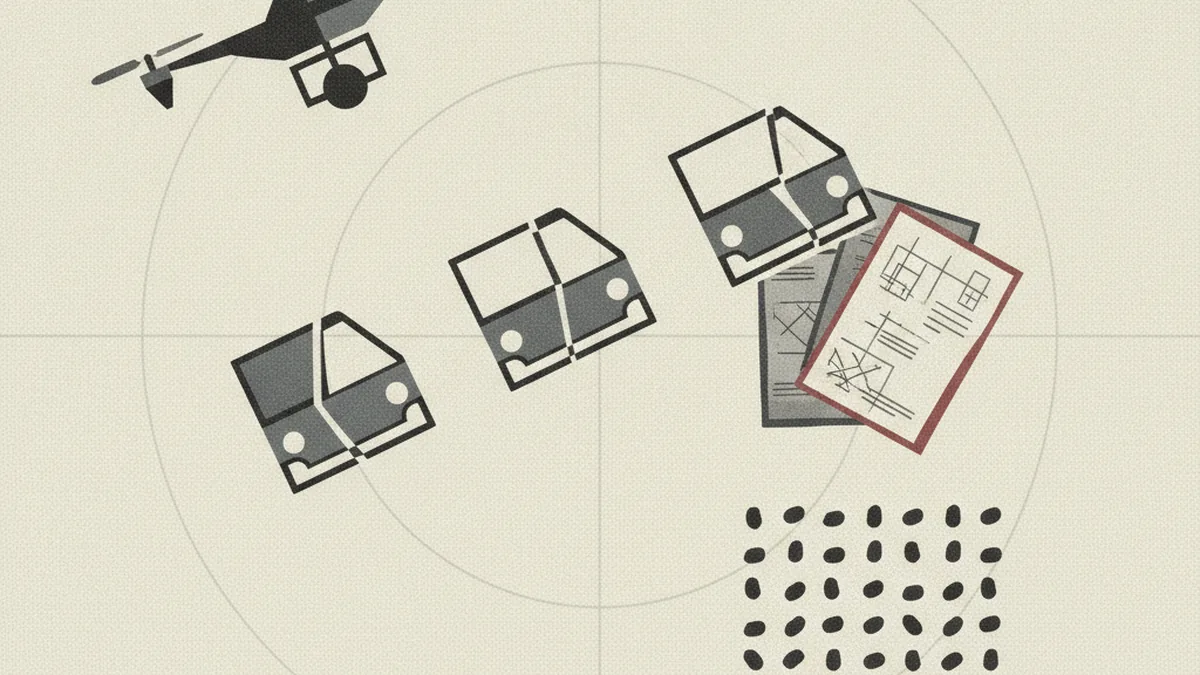
In the early hours of 21 February 2010, a Predator drone crew operating from the United States began watching three vehicles travelling in Uruzgan province, in southern Afghanistan. They watched for several hours.
The crew reported the convoy as carrying insurgents moving to attack a US special forces unit nearby. Helicopters were called in. They attacked the vehicles, killing around 23 civilians, including women and children, and wounding many more.
Who was actually in them
Ordinary travellers. Families moving between villages, including women and small children, in the kind of shared road transport that is normal across rural Afghanistan. Nothing about the convoy distinguished it from the vehicle that stopped for a wounded man in the Baghdad footage.
What the crew said while watching
The investigation that followed had an unusual asset: a full record of what the crew said as they watched. It showed a pattern that is easier to describe than to defend.
- Screeners watching the video feed reported seeing children among the passengers.
- Those reports were discounted or downgraded as the crew's assessment settled on a hostile convoy.
- Ambiguous behaviour was consistently read as evidence of hostile intent rather than as ordinary movement.
The mechanism, named
This is not people inventing a threat. It is people who expect a threat resolving every ambiguity towards the expectation, over hours, with each resolved ambiguity making the next one easier. The record shows the drift happening in real time. The same drift is audible in the Baghdad recording.
The investigation
| Finding | Detail |
|---|---|
| Cause | Inaccurate and unprofessional reporting by the drone crew |
| Key failure | Evidence of children present was not passed on properly |
| Contributing factor | Poor communication between the drone crew, screeners and ground commander |
| Action taken | Four officers reprimanded, two junior personnel admonished |
| Charges | None |
A US commander apologised publicly to the Afghan government, which was itself unusual.
For the broader pattern these findings sit inside, see the index of incidents, why precise weapons still kill civilians and the frame-by-frame reading of the 2007 footage.
Which category this belongs in
A misidentification case, and squarely so. Nobody has suggested the crew knew they were watching families and fired anyway.
But the investigation's own language matters. It did not find an unavoidable error made on reasonable information. It found reporting that was inaccurate and unprofessional, and evidence of children that was not properly passed on. That is negligence rather than bad luck, and the precaution rule is what it fails.
The crew was in another hemisphere
One feature of this case has no equivalent in the older entries in this index. The people watching and reporting were operating the aircraft from a base in the United States, several time zones away, on a shift.
The effects of that arrangement are argued about in both directions, and honestly so. Remote crews are not under fire. They are not tired from patrolling. Nothing about self-preservation is pushing them towards a trigger. All of that should improve judgement. Against that, they had no local knowledge, no ability to ask anyone on the ground, and a video feed that flattens a scene into a narrow grey rectangle.
What the Uruzgan record shows is that distance did not prevent the error, and the chain between the people watching, the screeners who saw children and the commander who authorised the strike was long enough that the most important observation fell out of it.
What Uruzgan shows that hours of watching did not solve
The assumption behind persistent surveillance is that time improves judgement: watch long enough and you will know what you are looking at. Uruzgan is the counter-example. The crew had hours, multiple observers and a live video feed, and the extra time was spent building confidence rather than testing it.
That is the same problem the Baghdad gunsight page describes from a different angle: the limiting factor is not how long you look or how good the sensor is, but whether anything in the process is designed to challenge the reading you have already formed. In both cases nothing was, and in both cases the people in the vehicles were who they appeared to be to everyone except the people deciding.
Questions people ask about this
How many died in the Uruzgan attack?
What did the investigation blame?
Was anyone prosecuted?
Where this comes from
- Uruzgan helicopter attack — Wikipedia
- Rules on precautions in attack — International Committee of the Red Cross
Spotted something wrong? Tell us and we will fix it.